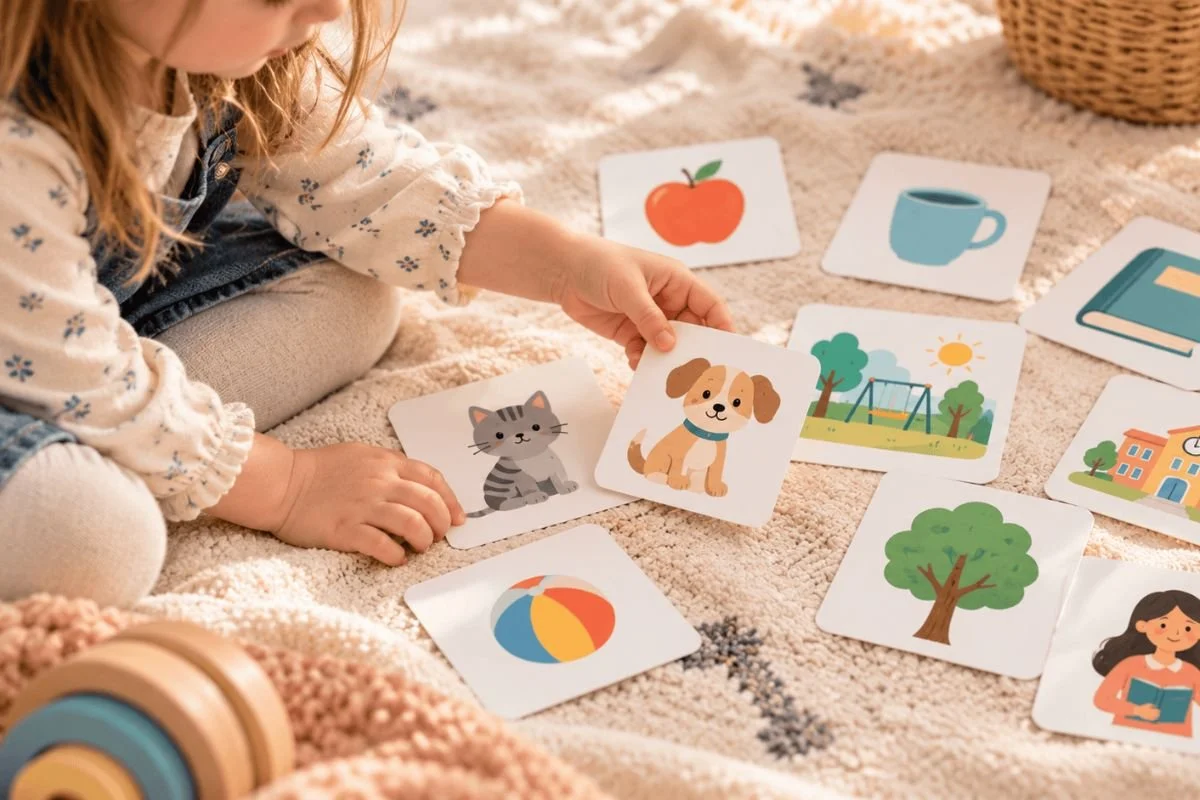
Did you know your child probably knows LOTS of words on this list of nouns, even if they don't know what a noun is yet? From talking about their favorite toys to naming the animals they see at the zoo, nouns are already a big part of their everyday vocabulary.
A noun is a word that names a person, place, animal, or thing, like mom, park, dog, or ball. To help your little learner recognize and use them, I've put together a list of 100+ simple nouns for kids, along with easy examples, fun games, and activities you can try together at home.
If you’re new here, hi! I’m Miss Beth, an early literacy specialist, the founder of Big City Readers, and host of the Play on Words podcast. I'm passionate about helping children build strong literacy foundations through playful, science-backed teaching methods.
What Is a Noun? (A Kid-Friendly Definition)
A noun is a word that names a person, place, animal, or thing. Some nouns name things you can see or touch, like a cat or a book, while others name ideas or feelings, like love and joy.
When you're introducing nouns to your child, I recommend starting with familiar objects. Look around the room and ask them to name a few things they see. A chair? That's a noun! Their favorite stuffed animal? Another noun!
Once they get the hang of it, you can start exploring different types of nouns together.
100+ Simple Nouns for Kids
Ready to practice? This list of nouns includes 108 kid-friendly words organized into categories, from people and animals to foods, toys, and things around the house.
I've bolded some simple CVC words, like cat, pig, and sun, that early readers can practice sounding out using their letter-sound knowledge. These are great words to start with if your child is still building their phonics skills!
People
mom, dad, baby, sister, brother, teacher, friend, doctor, chef, farmer, grandma, grandpa
Animals
dog, cat, fish, bird, frog, pig, cow, duck, bear, lion, horse, bunny
Places
home, school, park, zoo, farm, beach, store, library, city, pool, garden, kitchen
Things at Home
bed, cup, chair, door, lamp, sock, hat, book, spoon, clock, bath, blanket
Things at School
pencil, crayon, desk, paper, glue, bus, backpack, map, scissors, ruler, eraser, marker
Food
apple, milk, egg, bread, cake, pizza, banana, cheese, soup, corn, juice, cookie
Toys & Play
ball, doll, kite, bike, block, puzzle, slide, swing, train, robot, wagon, drum
Nature
sun, moon, tree, leaf, rock, rain, snow, star, flower, sky, hill, pond
My Body
hand, foot, nose, eye, ear, arm, leg, hair, mouth, tooth, knee, finger
Miss Beth Tip: Turn this word list into phonics practice! Choose a few of the bolded nouns and have your child say each sound before blending them together. Then ask them to draw a picture or use the word in a sentence. It's a fun, easy way to practice reading and vocabulary together.
And if your child is working on sounding out simple words, check out our CVC Words for Beginning Readers blog for more examples and activities!
Common Nouns vs. Proper Nouns: What's the Difference?
A common noun names a general person, place, or thing, while a proper noun names a specific one. Proper nouns always begin with a capital letter.
For example, dog is a common noun, but your dog's name, Max, is a proper noun. The same goes for city and Chicago!
Here are a few more examples:
| Common Noun | Proper Noun |
|---|---|
| dog | Max |
| city | Chicago |
| school | Lincoln Elementary School |
| day | Monday |
| month | November |
| holiday | Thanksgiving |

One simple way to practice is to have your child name something and then think of a specific example. You might say "store," and they could answer "Target." Or you say "friend," and they tell you their best friend's name!
Bonus: this activity helps them practice capitalization, too!
One or More? Understanding Plural Nouns
A plural noun names more than one person, place, animal, or thing. Most of the time, we make a noun plural by adding -s or -es to the end of the word.
For example, one cat becomes two cats, and one box becomes two boxes.
Here's a quick guide:
| Singular Noun | Plural Noun |
|---|---|
| cat | cats |
| dog | dogs |
| book | books |
| box | boxes |
| bus | buses |
| dish | dishes |
| mouse | mice |
| foot | feet |
| tooth | teeth |
| child | children |
Of course, English likes to keep us on our toes! Some nouns, like mouse and child, don't follow the usual spelling rules. These are called irregular plural nouns, and kids will learn them with practice and exposure.
For a quick activity, grab a few toys or blocks and practice naming them together. Hold up one block and say "one block," then add another and say "two blocks." Let your child take a turn!
Noun, Verb, or Adjective? Let's Compare!
Nouns name people, places, animals, and things; verbs describe actions or states; and adjectives describe nouns. These three types of words work together to help us build sentences.
Here's an easy way to see the difference:
| Noun | Verb | Adjective |
|---|---|---|
| dog | run | fluffy |
| ball | bounce | bumpy |
| cake | bake | yummy |
Now let's put them together! Instead of saying "dog," your child could say, "The fluffy dog runs.” See how adding a verb and an adjective gives us a much clearer picture?
Once your child understands nouns, you can introduce more word types using our List of 50 Verbs for Kids and Adjectives for Kindergarteners blogs.
6 Fun Noun Activities for Kids
The best way to help young kids understand nouns is to give them plenty of opportunities to use them! And you definitely don't need a stack of worksheets to make that happen.
Here are six easy noun games you can play at home or in the car:
Go on a Noun Scavenger Hunt: Challenge your child to find one person, place, animal, and thing. You can play around the house, at the park, or even while running errands. Have them name each noun they find!
Sort Pictures Into Noun Categories: Draw or print simple pictures of people, places, animals, and things. Mix them up, then have your child sort them into four groups. You can label each pile to sneak in a little word recognition practice, too.
Play I Spy a Noun: Give your child a clue about something nearby, like "I spy a thing that starts with /b/." Let them guess the noun, then switch roles! This is a fun way to practice identifying beginning sounds.
Label Things Around the House: Grab some sticky notes and label familiar objects like the door, lamp, and chair. Have your child help you read the labels, then leave them up for a few days so they can practice recognizing the words.
Play Noun or Not?: Call out different words and have your child hop if they hear a noun or freeze if they hear something else. Mix in words like dog, jump, happy, and school to keep them thinking!
Make Silly Sentences: Write a few nouns and verbs on separate pieces of paper. Let your child pick one of each and make up a sentence. A penguin that dances? A grandma who jumps? The sillier, the better!
If your child is ready to practice turning words into complete sentences, our Writing Prompts for Kindergarteners blog has more fun ways to get those ideas flowing.
FAQs About Nouns for Kids
What Is a Noun for Kids?
A noun is a word that names a person, place, animal, thing, or idea. For young children, start with familiar nouns they can see or touch, like mom, park, dog, and ball.
What Are 10 Examples of Nouns?
Ten simple examples of nouns are mom, teacher, dog, cat, park, school, ball, book, apple, and tree. These are good starting words because young children can easily recognize them in everyday life.
Is a Name a Noun?
Yes, a person's name is a proper noun. Proper nouns name specific people, places, or things and always begin with a capital letter, like Beth, Chicago, or Monday.
When Do Kids Learn About Nouns?
Kids start using nouns as soon as they start talking, but formal grammar instruction typically begins in kindergarten. Kindergarteners learn to use common nouns and simple plurals, while first graders build on those skills with proper nouns and other noun forms.
How Do I Teach Nouns to My Kindergartner at Home?
Start by pointing out familiar people, places, and things throughout your day. Have your child name objects around the house, sort pictures into noun categories, or play a noun scavenger hunt. Keeping it playful helps children recognize nouns without making it feel like homework.
Keep Supporting Your Child’s Writing Journey
Learning about nouns gives kids another way to understand the words they see, say, read, and write every day. Once your child starts recognizing nouns, you can encourage them to use those words to build their own sentences and share their ideas.
If your little learner is ready for more writing practice, check out the Ready to Write course to help develop their early writing skills through fun, engaging video lessons with plenty of activities. You can build writing confidence in just ten minutes a day!
Have questions about nouns for kids or building your child's early literacy skills? Send me a DM at @bigcityreaders or leave a comment below. And don't forget to explore our other blog posts for more reading and writing activities to try at home: