Kindergarten Spelling Words: 50 Words to Build Confident Readers
Looking for kindergarten spelling words to practice with your child? Start with simple, decodable words like cat, dog, sun, and map, along with common high-frequency words they'll see again and again as they learn to read and write.
I've put together 50 kindergarten spelling words below, grouped by type so you can easily find words that match the skills your child is practicing.
Jump to the Kindergarten Spelling Words List! ↓
If you’re new here, hi! I’m Miss Beth, an early literacy specialist and the founder of Big City Readers. Children need flexibility and fun to grow as readers. I use the Science of Reading and the 5 building blocks of early literacy (read, write, sing, talk, and play) to help make learning to read enjoyable for children and parents.
Why Is Spelling Important For Early Literacy Development?
Spelling may seem like a small part of learning to read and write, but it's a great building step. For kindergarteners, specifically, spelling begins to build a foundation for reading. When children learn to spell, they start recognizing patterns in words, which helps them read new words they haven't seen before. This process is closely tied to their ability to decode words: a key skill in reading.

Spelling also boosts writing skills. When kids know how to spell words, they can focus more on expressing their ideas rather than worrying about how to write each word. This confidence encourages them to write more, helping to see improvement (and more enjoyment) over time.
What Are the Kindergarten Spelling Words? (Plus 50 Simple Words!)
Kindergarten spelling words include simple words like cat, dog, hat, sun, map, and red, along with common high-frequency words children see often in early reading. Here are 50 words to practice, grouped by type:
High-Frequency Sight Words
the
and
is
it
in
of
to
a
you
that
Phonetic Words
cat
dog
hat
bed
run
man
sit
sun
top
red
Short Vowel Words
bat
cap
pen
pig
cup
rat
leg
hop
fun
bug
CVC (Consonant-Vowel-Consonant) Words
map
kid
dot
lap
net
pot
dig
bun
jam
fan
Seasonal/Themed Words
leaf
snow
sun
tree
gift
rain
kite
flower
egg
beach
Start by choosing a small number of words—five to ten per week is usually enough for kindergarteners. At the beginning of the week, introduce the words and go over them together. Throughout the week, you can practice them in different ways: writing them, saying them out loud, and using them in sentences. All these introductions together will help the spelling stick in their brains.
Ready for the next step? Explore our First Grade Spelling Words for 50 more words to practice as your child's reading and spelling skills grow!
When Should Children Start Learning Spelling Words?
There isn’t a set age when every child should start learning to spell, but many children begin to learn spelling skills in kindergarten. This is typically around the same time in their development when they’re getting comfortable with recognizing letters and sounds.
For some kids, learning to spell may come naturally as they learn to read. For others, it might take a bit more practice. The key is to introduce spelling words when your child shows interest in letters and words. Most importantly, as a parent, try to remain positive and keep all the activities involving spelling light-hearted. This will keep them interested for as long as possible!
What Are The Foundations Of Early Spelling?
In kindergarten, spelling instruction usually starts with a mix of sight words, phonetic words, and phonics. Each of these elements plays a crucial role in helping young children build their reading and writing skills.
Phonetic Words: These words are spelled just like how they sound. Examples include words like "cat," "dog," and "bat." These words are easier for children to decode because the letters directly correspond to the sounds they make. Phonetic words are usually some of the first words that children learn to spell because they help them understand the basic letter-sound relationships.
Sight Words: These are high-frequency words that children need to recognize instantly, as they often don’t follow standard phonetic rules. Words like "said," "where," "the," and "and" are common examples. Learning sight words early on is important because it allows children to read more fluidly. Instead of having to sound out every word, they can quickly identify these frequently used words, which boosts their confidence and reading speed. To read more about sight words, check out my post - Sight Words for Kindergarteners: How To Teach Sight Words Correctly
Role of Phonics:This last aspect in early spelling education cannot be overstated. Phonics is the method of teaching reading and spelling by helping children understand how letters and sounds work together. When kids learn that certain letters or combinations of letters make specific sounds, they begin to recognize patterns in words. For instance, once a child learns how to spell "bat," they can apply that pattern to spell other words like "cat," "hat," or "rat." Phonics not only helps with spelling but also strengthens reading skills by making it easier for children to decode new words.
Creating a balance of sight words, phonetic words, and phonics instruction in kindergarten sets a strong foundation for literacy. Sight words help children recognize common words quickly, phonetic words teach them to decode new words, and phonics ties everything together by revealing the patterns and rules that govern our language.
Together, these elements make learning to read and write a more accessible and enjoyable process for young learners.
How Can I Make Spelling FUN For My Kindergartener?
While spelling is a great way to begin introducing reading/writing, it’s not the most fun topic. To help make learning more exciting in your household, here are some activities I highly recommend trying:
Snacktime: Pick some words and snacks that have the same beginning sounds to talk about how we might spell those words. It’s ok at the beginning to just talk about the first sound! Example: talking about the /k/ sound you might have crunchy carrots or cookies! Bonus, make the letter out of the snack!
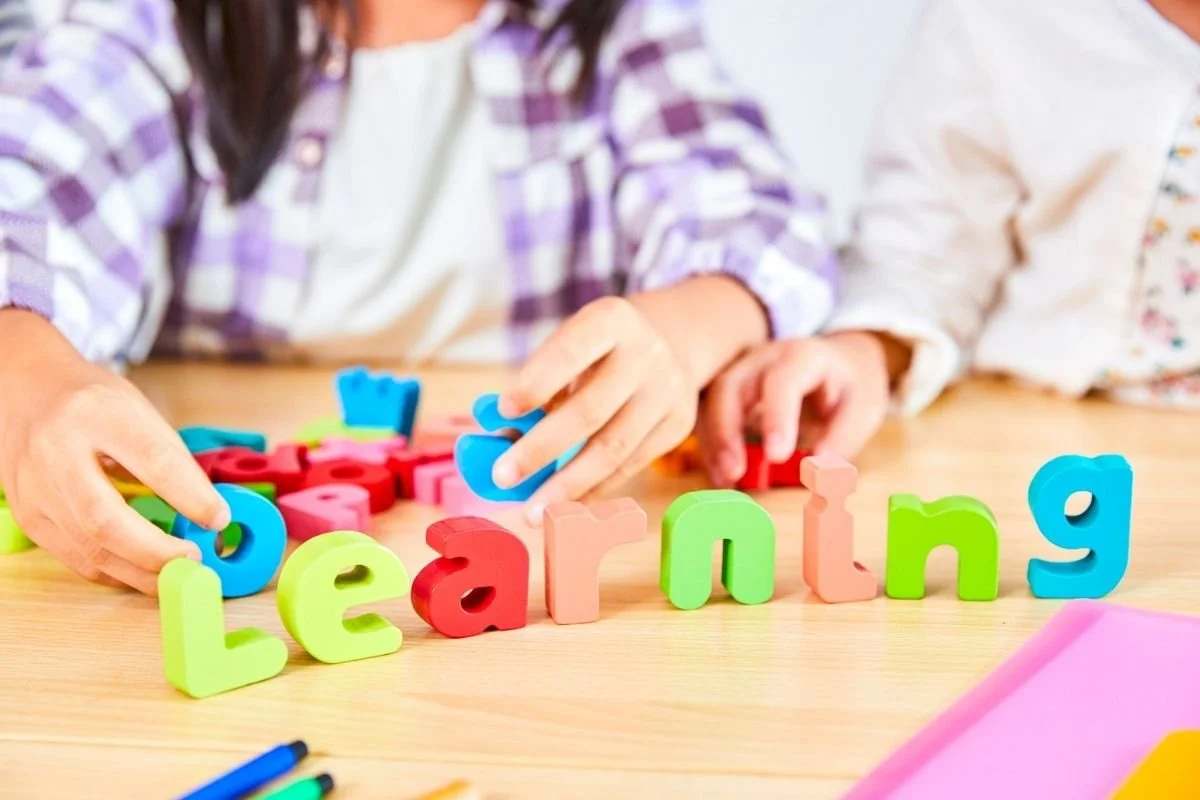
Multisensory Activities: Playdough is one of my favorite multisensory activities that you can combine with sight words or spelling activities. If your child is still building their writing muscles, then they can build the letter with playdough. If your child is writing, you can build resistance by letting them write with the pencil IN playdough. You can also trace words or letters on the grass or the rug with your finger.
Spelling Word Games: Games are a great way to make spelling practice fun. You could play a simple game of “hangman” with their spelling words, or try “memory,” where you match the words to pictures. Another idea is to play “spelling bingo,” where each square on the bingo card has a spelling word, and you call out the words for your child to cover.
Craft Ideas: Crafts can also be a fun way to practice spelling. For instance, you could help your child make a “word tree,” where each leaf on the tree has one of their spelling words. Or, try making a “spelling bracelet,” where each bead represents a letter in a word.
Spelling Can Be a Great Learning Activity for the Whole Family!
Spelling can be a fantastic learning activity that involves the whole family. As a parent, your role is to create a positive and supportive environment that makes learning enjoyable. Celebrate your child's successes, no matter how small, and provide gentle encouragement when they encounter challenges.
Setting aside regular time for spelling practice is helpful, but remember to stay flexible—if your child isn’t feeling up to it, taking a break and revisiting the activity later is perfectly fine. The key is to keep the experience fun, positive, encouraging, and make spelling a cherished part of your family’s routine.
Do you have any questions about how to introduce spelling with your kindergartener? Let me know in the comments!