Word Family -En Lists: Examples & How to Teach Them
If your early reader is working on the -en word family, save this list for your next practice session! Word families give kids a simple pattern to look for so they can use what they know instead of approaching every new word from scratch.
The -en word family is a great one to practice with your child because you can start with short-e words like hen, pen, ten, and den. In this post, I’ll walk you through which -en words to try first, playful sentences you can read together, and easy ways to practice them at home.
If you’re new here, hi! I’m Miss Beth, an early literacy specialist, founder of Big City Readers, and host of the Play on Words podcast. I teach parents simple, science-backed ways to help their kids become confident readers while making the process enjoyable for both of you.
What Is the -En Word Family?
The -en word family is a group of words that share the same -en ending sound and spelling. Once your child can read that ending, they can practice changing the first sound to build and read a whole new word.
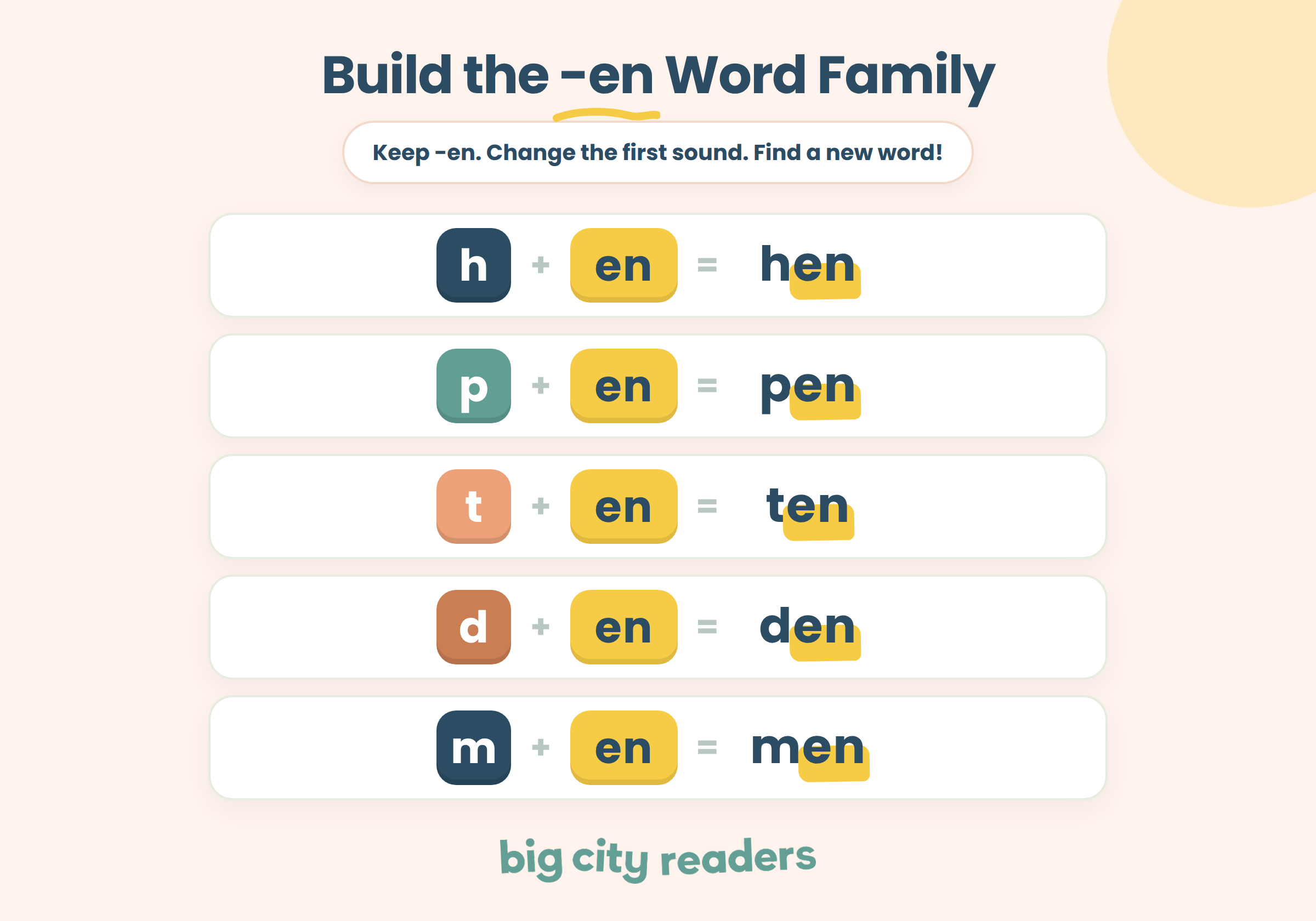
For example, start with hen. Keep the -en, swap /h/ for /p/, and now you have pen! This helps your child notice patterns in words while still practicing the important work of sounding them out.
And yes, word families rhyme! Hearing those matching sounds can make the pattern easier for your child to recognize as they’re learning to read.
-En Word Family List
Let’s start with the simplest -en word family words and work our way up. Choose a few words that match what your child is working on right now, then add more as they start to get comfortable with the pattern.
3-Letter -En Words
These are the best -en words for beginning readers because your child can keep the -en ending the same and practice changing just the first sound:
den
hen
men
pen
ten
If your child is working on other short-vowel patterns, save my 100+ Short Vowel Words for Kindergarteners List for more words to practice together!
-En Words With Blends and Digraphs
Ready to make it a little more challenging? These words still end in -en, but there’s an extra letter at the beginning:
glen
then
when
wren
Words like then and when are a great opportunity to practice digraphs, where two letters work together to represent one sound. Wren introduces another fun reading discovery: sometimes a letter can be there without making a sound!
Teacher Tip: Your child doesn’t need to start working on these just because they mastered hen and pen. If a new word introduces a pattern they haven’t learned yet, save it for later and stick with the words they’re ready to decode.
More Words That End in -En
You’ll also see -en at the end of longer words, including:
broken
chicken
children
even
eleven
frozen
garden
golden
happen
hidden
kitten
kitchen
listen
mitten
open
oven
seven
sudden
wooden
Keep in mind, these aren’t all part of the same rhyming -en word family as hen. In many of these longer words, the ending sounds more like “uhn,” so chicken and hen, for example, don’t rhyme.
I still like introducing these to growing readers once the short-e -en family feels familiar because it gives them a chance to notice the same spelling pattern while also discovering that letters don’t always make the exact same sound in every word.
Decodable -En Sentences to Practice at Home
After your child has practiced reading a few -en words on their own, try putting them into short sentences. This helps your early reader practice using the words in context instead of only recognizing them from a word family list.
Start with one sentence at a time and encourage your child to sound out the words:
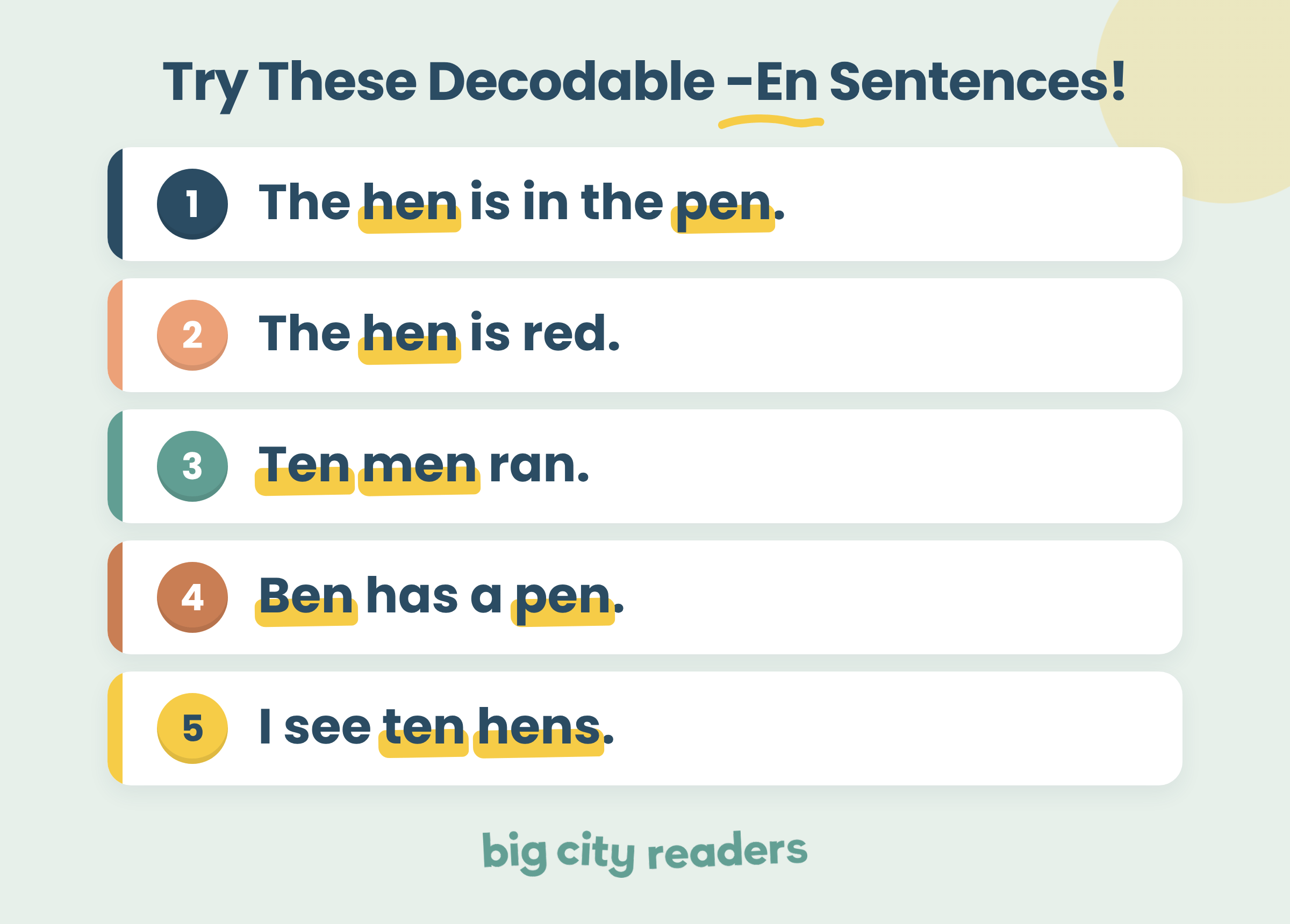
The hen is in the pen.
The hen is red.
Ten men ran.
Ben has a pen.
The hen sat.
I see ten hens.
You can make this even more playful by letting your child make up a sentence using one of the words, too. The sillier, the better! A hen with ten red pens? Why not?
If your child could use more practice blending three-sound words like these, read my CVC Words for Beginning Readers List next for more guided support and activities.
Playful Ways to Teach the -En Word Family
You don’t need a worksheet or a long reading lesson to practice word families! A few minutes of playing with the -en pattern before dinner can give your child plenty of opportunities to hear the sounds, build words, and practice reading them.
Here are a few easy ways to try it:
Start with the sounds. Say /en/ together, then add a sound to the beginning: /h/ + /en/ = hen. Let your child blend the two parts before showing them the written word.
Swap the first sound. Once they can read hen, keep -en and change the beginning: hen → pen → ten. Use letter tiles or sticky notes to make this easy and fun!
Turn it into a game. Give the beginning sound and let your child finish the word. Try, “What word do we make with /m/ + /en/?” Then switch roles and let them quiz you!
Practice the words in sentences. Once individual words are getting easier, use the decodable sentences above to help your child practice reading them in context.
Let them spell the words. Ask your child to build or write ‘pen’ or ‘ten’ by listening for each sound they hear. Sounding out words as they spell is great practice for understanding how those sounds and letters work together.
Want even more fun ways to practice these skills together? Check out my guides to Sound Mapping Activities for Early Readers and Phonics Activities for Kindergarten next!
Common Questions About the -En Word Family
What Is the -En Word Family?
The -en word family includes words that share the short-e -en ending, like hen, pen, ten, den, and men. Once your child recognizes the pattern, they can change the beginning sound to build and read new words.
What Words Are in the -En Word Family?
Common -en word family words include den, hen, men, pen, and ten. Growing readers can also practice more complex words ending in -en, but not every word spelled with -en rhymes with hen. Just something to keep in mind!
How Do You Teach Word Families?
Start with one familiar ending, like -en, and practice changing the sound at the beginning to make new words. Building the words with letters, reading them aloud, and then using them in simple sentences gives your child several playful ways to practice the same pattern.
Do Hen and Chicken Both Belong to the -En Word Family?
Not quite. Hen and chicken both end with the letters -en, but they don’t have the same ending sound or rhyme. Chicken is better treated as a longer word to explore once your child is comfortable with the short-e -en word family.
Keep Practicing, Playing, and Reading!
Word families help us show new readers that every new word doesn’t have to feel brand new. Every time they recognize a familiar pattern like -en, they’re building the confidence to tackle the next word. Keep having fun with it and celebrating the little wins along the way!
If your child is working on these early reading skills, my Kindergarten Ready course is a great next step! We’ll practice sounding out words, blending sounds, sight words, and other foundational skills through short, playful lessons designed to help reading click.
Have a question about -en word families or other spelling patterns? Send me a DM @bigcityreaders or leave a comment below, and explore our other blogs for more tips and science-backed ways to help your child learn to read: