First Grade Spelling Words: 50 Words to Build Stronger Readers
Looking for first grade spelling words to practice with your child? First graders are building on the simple words they learned in kindergarten and beginning to spell words with blends, digraphs, long vowels, and other common spelling patterns.
Below, you'll find a first grade spelling word list grouped by skill, plus simple ways to practice these words at home.
Jump to the First Grade Spelling Words List! ↓
If you’re new here, hi! I’m Miss Beth, an early literacy specialist and founder of Big City Readers. Children need flexibility and fun to engage and grow as readers. I use the 5 building blocks of early literacy (read, write, sing, talk, and play) and the Orton Gillingham method to make learning to read fun for kids and their parents.
Spelling Is A Key Part Of Your Child’s Learning Journey
Spelling is a fundamental part of learning that goes beyond just writing words correctly. It plays a crucial role in a child's overall development, especially in reading and writing. When kids learn to spell, they start to understand the patterns and rules of language, which helps them decode new words more easily. This skill is essential for reading because it allows children to recognize words quickly and read more fluently.
Even more, spelling boosts writing skills. When kids know how to spell words, they can focus on expressing their ideas rather than worrying about spelling each word correctly. This confidence encourages them to write more, improving their communication skills over time.

Spelling also supports vocabulary growth. As children learn new words, they expand their understanding of language and can use a richer vocabulary in both speaking and writing.
Overall, spelling is not just about memorizing words; it's about building a strong foundation for literacy that will support academic success across all subjects. By making spelling fun and engaging, parents and educators can help children develop a love for language that lasts a lifetime.
What Are the First Grade Spelling Words?
First grade spelling words include words with short and long vowels, blends, digraphs, and other spelling patterns kids are learning to read and write. Words like after and every give first graders practice applying those patterns as their skills grow.
Here are 50 foundational spelling words you can work on together:
High-Frequency Words
after
again
any
ask
by
could
every
fly
from
the
Common Verbs
going
had
has
know
let
live
may
put
take
think
Pronouns and Possessives
her
him
his
them
they
Prepositions and Conjunctions
as
by
of
over
Descriptive Words (Adjectives/Adverbs)
just
old
Time and Sequence Words
once
then
when
Action Words (Verbs)
stop
walk
Miscellaneous
round
some
thank
were
how
Looking for the right level for your child? Start with our Kindergarten Spelling Words for simpler practice, or keep building with our Second Grade Spelling Words list.
What Are the Foundations of First-Grade Spelling?
In first grade, spelling builds on the foundations set in kindergarten, focusing on developing more advanced skills that support reading and writing. Here’s how it typically unfolds:
Phonetic Words: Just like in kindergarten, phonetic words continue to be essential. These are words that sound exactly as they are spelled, like "cat" and "dog." First graders expand their knowledge by learning more complex phonetic patterns, which helps them decode and spell new words with confidence. It's normal for kids to spell how they hear until they have been explicitly taught new spelling patterns, not just told how to spell the word. We follow a trajectory of introducing phonics rules (more below!)
Sight Words: Sight words remain a key focus. You've heard me say this a thousand times- we do NOT teach kids to just memorize words. We map the parts of the words that kids do know and teach the irregular part of the part that follows a rule that hasn't been taught yet. Example: the word HAVE- English words do not end in a V so the e helps the word. It does not follow the typical magic E rule and should be orthographically mapped and practiced.
Phonics Instruction: Phonics becomes more sophisticated in first grade- but we still don't introduce every spelling rule all at once. Children learn about blends (like "bl" in "blue") and digraphs (such as "sh" in "ship"), which helps them understand how different letter combinations create specific sounds. This knowledge allows them to apply spelling rules more effectively across various word types. We then get into vowel teams like “EA” and “OA”.\
Here is a typical progression of introducing rules:
Review short vowels and consonant-vowel-consonant (CVC) words
Compound words
FLSZ
CK/K
Initial consonant blends
Final consonant blends
Magic “e”
Then long vowels and more!
But you know your child and if they're ready to learn a few rules at once or maybe wait a few weeks to learn the rule. Start here to learn more for First Grade Bootcamp or for more advanced first and second graders, take Mastering Spelling Rules.
Together, these elements make learning to read, write, and learn a more enjoyable experience as they grow for years to come!
How Does Spelling Progress From Kindergarten To First Grade?
In kindergarten, spelling education focuses on building a strong foundation for literacy your child will use for the rest of their lives. Children begin with phonics instruction, which teaches how letters and sounds work together.
For example, phonetic words like “cat” and “dog” are emphasized to understand basic letter-sound relationships. To read more about how incredible phonological awareness is to learning, check out my post: Phonological Awareness vs Phonics: What Is The Difference?
As their kindergarten year progresses, sight word instruction begins to take place. Sight words, such as “the” and “and”, are high-frequency words that help reading fluidity by reducing the need to sound out every word. Although sight words do not follow typical spelling patterns, it’s important to teach them the right way. My post Sight Words for Kindergarteners: How to Teach Sight Words Correctly goes into more detail on this.
Then the transition to first grade focuses on expanding these spelling skills. They begin learning about word families (e.g., "cat," "bat") and patterns, which help them apply spelling rules more effectively. First graders also start understanding blends like "tr" in "tree" and digraphs like "sh" in "ship."
These concepts build on their kindergarten knowledge, enhancing their ability to read and write more complex sentences. By integrating these elements, children develop a comprehensive understanding of spelling that supports their overall literacy.
To see a list of words for kindergarteners, check out my post: Kindergarten Spelling Words: 50 Great Foundational Words For Learning.
How Can I Make Spelling Fun For My First Grader?
I get it – spelling can be a bit dry. That being said, with a little creativity, it can become an exciting part of your kindergartener's day. Here are some fun activities to try:
Snack time Sounds: Turn snack time into a learning opportunity by picking snacks that start with the same sound as the spelling words. For example, if you're focusing on the /b/ sound, you might have bananas or blueberries. Talk about the sound and try forming the letter with the snack itself!
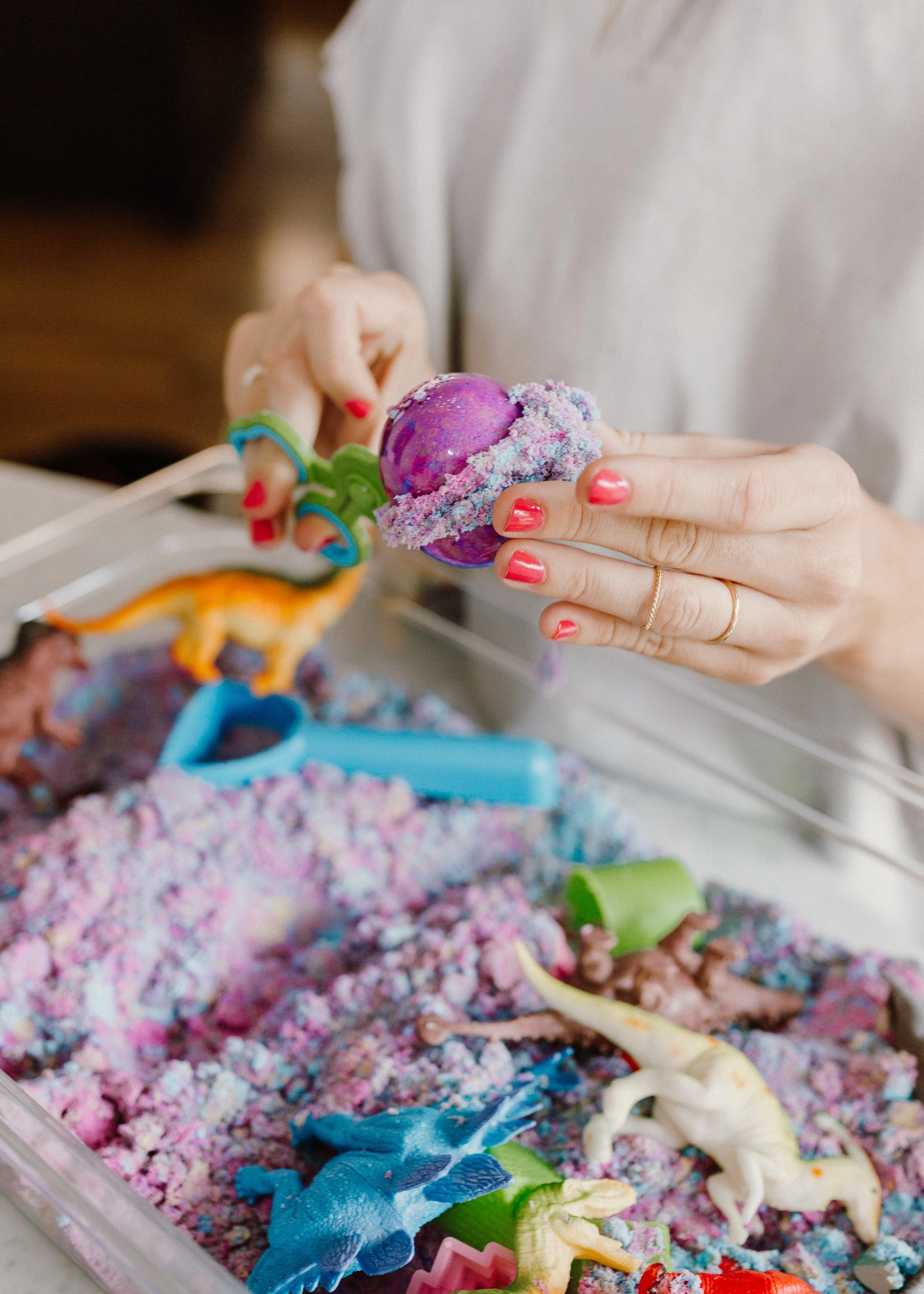
Multisensory Play: Use playdough to make spelling tactile and fun. Kids can shape letters with playdough, which helps them learn through touch. For those who are writing, let them press a pencil into the playdough to form letters, adding a bit of resistance to strengthen their writing muscles.
Spelling Games: Games like "hangman" or "memory" can make spelling practice more engaging. In "memory," match words to pictures, and in "spelling bingo," each bingo square has a word that you call out for your child to cover.
Creative Crafts:Get crafty by making a "word tree" where each leaf features a spelling word, or create a "spelling bracelet" with beads representing each letter of a word.
My Top Spelling Tip: Use Mapping!
I’m sharing one of my favorite tips for helping kids learn how to spell (that I typically only share in my On-Demand Courses)—and it’s so much more than just memorizing words. Spelling gets a lot easier when kids understand the sounds that make up a word and how those sounds connect to letters.
That’s where mapping comes in!
Here’s how to get started:
First, teach your child to break the word down into its individual sounds. For example, if you’re working on the word “the,” have your child listen carefully and identify the two sounds: “th” and “uh.” You’re showing them that each word is made up of smaller, separate sounds.
Next, help your child connect those sounds to the letters that represent them. For “the,” they’ll learn that “th” works together to make one sound, and “e” makes the other.
Finally, practice writing the word while saying the sounds aloud.This step helps reinforce the connection between the letters, sounds, and how they come together to form the whole word.
Mapping not only makes spelling easier, but it also builds your child’s confidence by giving them a clear process to follow. Plus, it’s a fun and interactive way to learn together.
Take Learning a Step Further as a Family!
Reading, writing, and spelling are three foundational skills (plus so many more) that prepare your first grader to be comfortable and confident with new material for the rest of their life.
If you are having fun learning to spell together, but want to take it a step further, I HIGHLY recommend checking out my On-Demand Course For First Grade!

Through fun and engaging activities like phonemic awareness, writing words and sentences, and blending sounds, your child will develop essential literacy skills. This approach builds their confidence while ensuring no foundational steps are missed.
Best of all, the short video format makes it easy to fit learning into your busy schedule, giving you the flexibility to pick it up whenever it works best for you!
Spelling Is a Great Way to Connect With Your First Grader in a Fun (& Low-Stress) Way!
Spelling is a fun opportunity to connect with your first grader to nurture their literacy skills, while still keeping the learning fun and light. Incorporating engaging activities and maintaining a positive attitude can make spelling practice an enjoyable part of your family's routine.
Above all, remember to celebrate every achievement, no matter how small. There are HUGE spelling wins that happen every day, so take this opportunity to foster a love for learning that extends beyond the classroom.
Do you have any examples of spelling words you use in your home or classroom? Let us know in the comments! And to keep up with all the latest tips for young learners, check out my recent posts: