B and D Reversal: Why It's Normal & How to Help Your Child
See your kiddo writing "b" as "d"? Don't panic. This is completely normal in preschool, kindergarten, and even first grade.
If you’re new, hi! I’m Miss Beth. Here at Big City Readers, we take a different approach to early childhood learning. I believe children learn best through flexibility and fun, not by sitting at a desk. My approach combines the building blocks of early literacy with the Orton-Gillingham method, engaging all three learning pathways: visual, auditory, and kinesthetic.
And if you’re not sure when to step in, tune into the Play on Words podcast episode below! It’s more of a deep dive into letter reversals in general.
Here's What's Actually Happening
Our brains aren't wired for reading—they're wired for recognizing objects. When kids look at letters, they use the same brain wiring that tells them a shoe is still a shoe, even when it's flipped over. Makes sense, right?
The problem? Letters don't work that way. Kids have to learn that symbols like "b" and "d" are totally different, even though they look similar.
The Fix
Daily practice with multisensory, systematic phonics instruction helps kids understand this difference. And no—letter reversals at this age don't mean your child has a reading disability.
Build the Foundation First
Before those letter reversals will click, kids need to understand two key concepts:
1. We read from left to right, top to bottom. Point this out every time you read together. Run your finger under the words as you go. Make it obvious and repetitive.
2. Letters always start at the top. Ask constantly: "Where do we start our letters? At the top!" This consistent starting point builds muscle memory and reduces confusion.
Once these foundations are solid, try this silly phrase kids love:
"b has a belly, d has a diaper"
Now it makes sense! The "belly" is on the left (where we start reading), and the "diaper" is on the right (where we end up).
Simple, memorable, and it works!
The Bottom Line
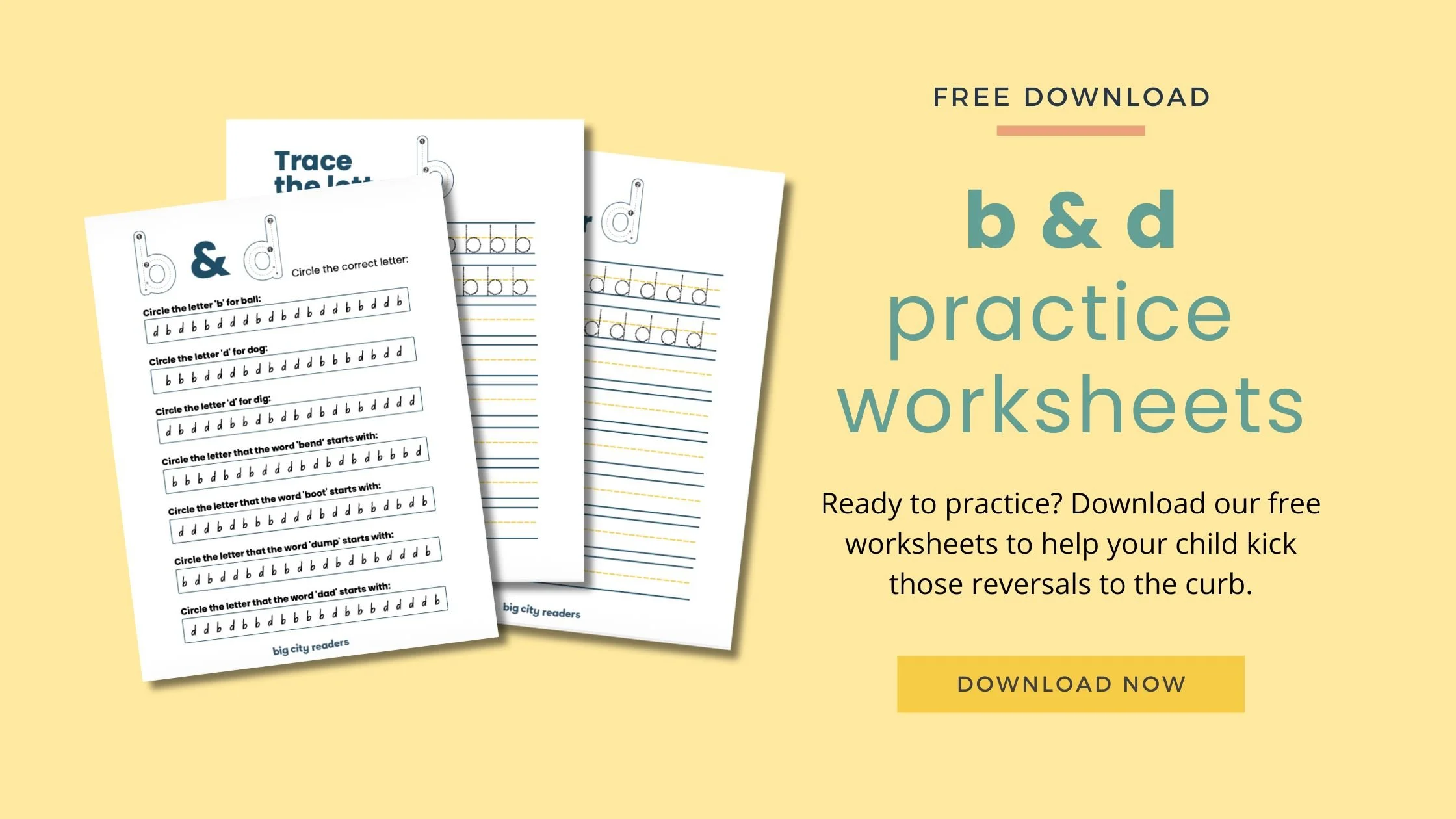
B and d reversals are one of the most common struggles for beginning readers, You're definitely not alone! With just a few minutes of focused, consistent practice each day, most kids start showing real improvement within 2-3 weeks. Be patient, keep it playful, and celebrate the small wins. Your child is right on track!
Want more support? Check out our courses designed specifically for Pre-K through Kindergarten. They build all these foundational skills with fun, multisensory activities your child will love.
Raising Readers Workshop: The start-here masterclass that helps parents and teachers understand how kids learn to read using the science of reading.
Ready to Write Course: Perfect for preschoolers through early writers, this course builds the inventive spelling confidence that leads to fluent writing.
The Play on Words Podcast: Bite-sized parent episodes on early literacy, spelling confidence, and decoding tips straight from the classroom.
Do you have a question about something you notice your child struggling with? Drop it in the comments, I love hearing how families are learning at home together! Next, check out these related blog posts: