Three-Syllable Words for Early Readers: When & How to Teach Them
Once your child can confidently read short words like cat, hop, and sun, it’s time to take the next step… Three-syllable words! They might sound big and complicated, but for early readers, reaching these longer words is an exciting milestone.
Learning to read them helps build fluency, strengthen spelling skills, and teach kids that big words aren’t scary, they’re just made of smaller, familiar parts. If you’re unsure when to start teaching three-syllable words or how to make them less intimidating, this guide is for you.
Have we met? Hi, I’m Miss Beth! I’m an early literacy specialist and the founder of Big City Readers, where we make learning to read feel fun and accessible for every child. In this post, we’ll talk about how to know when your child is ready to tackle three-syllable words, how to teach them step by step, and how to transition from decoding to spelling with confidence.
How to Know Your Child Is Ready For Three-Syllable Words
Every child’s reading journey moves at its own pace, so it’s helpful to meet them where they are. If your child is still learning to hear and clap syllables, start with our blog post on Three-Syllable Words to Easily Introduce at Home. Inside, you’ll find a full list of three-syllable words to practice, along with fun games that build rhythm and oral awareness.
Once your child can recognize and count syllables when they speak, it’s time to begin decoding those same words on the page. Most early readers are ready for three-syllable words when they can:
Confidently blend and decode CVC words like cat and sun
Recognize common digraphs (ch, sh, th) and vowel teams (ai, ee, oa)
Hear and clap syllables in everyday words
If your child can already read sun and sunset or hop and hopping, they’re ready to stretch into three-syllable territory. Noticing patterns (like realizing com + pu + ter makes computer) is a sign they’re ready to explore syllables at a deeper level and connect those sounds to print.
Understanding the Role of Syllable Types
When children start reading three-syllable words, understanding syllable types gives them the “why” behind how words sound. This helps them decode and spell, instead of guessing. You don’t need to introduce all six syllable types at once, but even some light exposure helps.
Try casually pointing out patterns like these during reading or writing practice:
Closed Syllable: Ends in a consonant, making the vowel short.
Example: bas/ket (basket), mag/net/ic (magnetic)
Open Syllable: Ends in a vowel that says its name.
Example: ti/ger, ro/bot
Silent E (Magic E): Ends with a vowel-consonant-E pattern.
Example: com/pete, in/vite
Vowel Team: Two vowels work together to make one sound.
Example: rain/bow, pea/nut
R-Controlled: The vowel sound changes when followed by r.
Example: tur/tle, car/pet
Consonant + le: Ends with -ble, -cle, -dle, etc.
Example: ta/ble, ap/ple
Use simple language when you talk about these patterns: “See how the vowel is closed in ban/an/a? That’s why it says /ă/ instead of /ā/.” These small observations help kids understand the structure behind words, which they’ll rely on as reading gets more advanced.
How to Teach Three-Syllable Words (Step-by-Step)
Once your child is ready, here’s how to begin teaching three-syllable words in a way that feels approachable and fun. If you’d like a big three-syllable words list to practice, be sure to check out that blog post for examples you can use during decoding lessons or storytime.
1. Clap, Tap, or Jump It Out
Start by saying the word aloud and helping your child feel its rhythm.
“Let’s try banana—ba-na-na. Three claps!”
This connects what they hear to what they’ll soon see in print, reinforcing that longer words are made of smaller, predictable parts.
2. Break the Word Into Visual Chunks
Write the word down and draw a light line or slash between syllables:
com / pu / ter, el / e / phant, di / no / saur
Cover all but the first chunk. Read one syllable at a time, then blend them together:
“Com… pu… ter! Computer.”
This chunking strategy helps children decode rather than guess, and prepares them for spelling longer words later.
3. Blend and Check for Meaning
Model the process first:
“I’ll read the first part: com. You read the next: pu. Let’s put them together…computer!”
Then connect it to meaning:
“What do we use a computer for?”
Comprehension keeps the learning purposeful and shows your child that reading is about understanding, not just sounding out.
4. Highlight Syllable Patterns
Once your child is comfortable decoding, gently introduce why certain syllables sound the way they do. You can use examples like:
com/pete → “The E at the end makes the first vowel say its name.”
ba/na/na → “Each vowel is short because the syllable ends in a consonant.”
ta/ble → “The -ble ending makes its own syllable.”
Recognizing these relationships between letters and sounds lays the groundwork for strong spelling habits.
5. Practice Through Play
The best practice happens through laughter and movement! Try these playful activities:
Syllable Stack: Stack a block for each syllable you say.
Silly Sentences: “The elephant ate spaghetti!”
Syllable Sort: Mix two- and three-syllable words, then sort them by number of beats.
Play keeps motivation high and reinforces the rhythm of multisyllabic reading.
Guiding Early Readers From Reading to Spelling
Once your child can comfortably read three-syllable words, it’s time to help them spell them out. Writing the words out reinforces the same decoding skills, but in reverse.
Here’s how to make the transition:
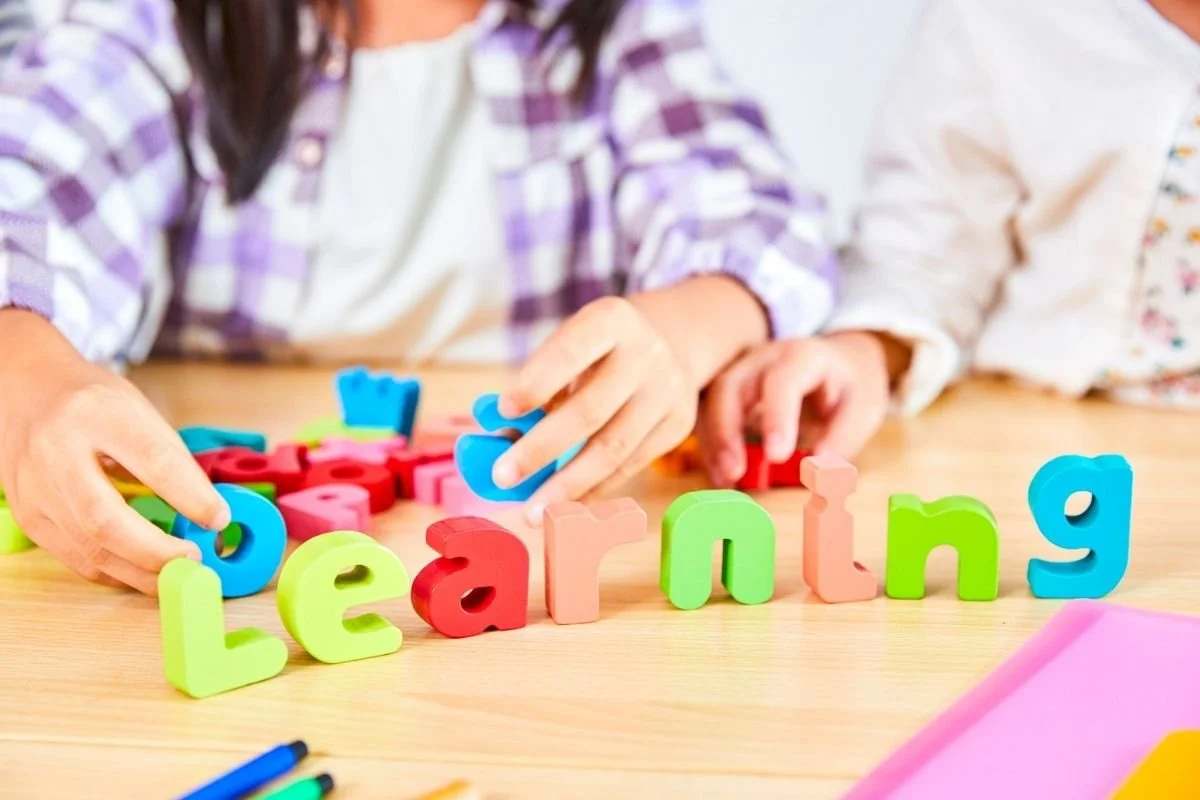
Build before writing: Use letter tiles or magnetic letters to build each syllable.
Say as you spell: Have your child say each syllable aloud while writing it.
Color-code vowels: Highlight vowels to visualize patterns (open vs. closed).
Start with familiar words: Use everyday examples like banana or computer before trying trickier ones.
Spelling long words strengthens pattern recognition and makes reading feel easier. It’s also a huge confidence booster! Kids love realizing they can write the same big words they read.

What If My Child Gets Stuck?
Every reader progresses differently, so don’t stress if yours gets stuck from time to time. Some kids will start chunking three-syllable words after a few tries; others may need more repetition. Both are perfectly normal.
If your child gets stuck:
Return to clapping and chunking the word.
Break it into smaller sections and practice just one syllable at a time.
Keep lessons short and end on a success.
Remember: Progress is measured in comfort and confidence, not speed.
The Next Step In Your Child’s Reading Journey
Learning to read longer words is a milestone worth celebrating. Three-syllable words challenge kids to listen closely and trust their growing decoding skills. The more your child practices breaking words into parts, the stronger their reading fluency and comprehension will become.
If you’re ready for the next step, our Mastering Spelling Rules course can help take their skills even further. Designed for children who are starting to read and spell more complex words, the course teaches vowel patterns, syllable types, and spelling rules in a fun, hands-on way.
For more literacy tips and research-backed strategies, follow @bigcityreaders on Instagram or explore our related blog posts: