What Are Digraphs? (With Examples & Word Lists)
What are digraphs? How are they different from blends? And why does it all matter when your child is learning to read? These are just a few of the questions I get from parents navigating the early reading stage.
Maybe they’re sounding out ‘ship’ and say /s/ /h/ /i/ /p/. You pause for a second because that’s not quite how it goes…but you can tell they’re trying so hard. And they’re not wrong! They’re applying what they’ve learned, they’re just missing one tiny but important piece: the digraph.
When children learn that two letters can work together to make one sound, tricky words like ship, chat, and rain suddenly make a lot more sense. So let’s walk through it together.
If you’re new here, hi! I’m Miss Beth, an early literacy specialist and the founder of Big City Readers. I help parents support early reading and writing through playful, research-backed strategies rooted in the science of reading. If you’ve been wondering what digraphs are and how to teach them in a way that makes sense, you’re in the right place.
What Are Digraphs? A Parent-Friendly Explanation
A digraph is when two letters work together to make one sound. Most children are introduced to them in late kindergarten or early first grade, once they have a good grasp of individual letter sounds. The key is remembering that we’re talking about sounds, not just the letters on a page.
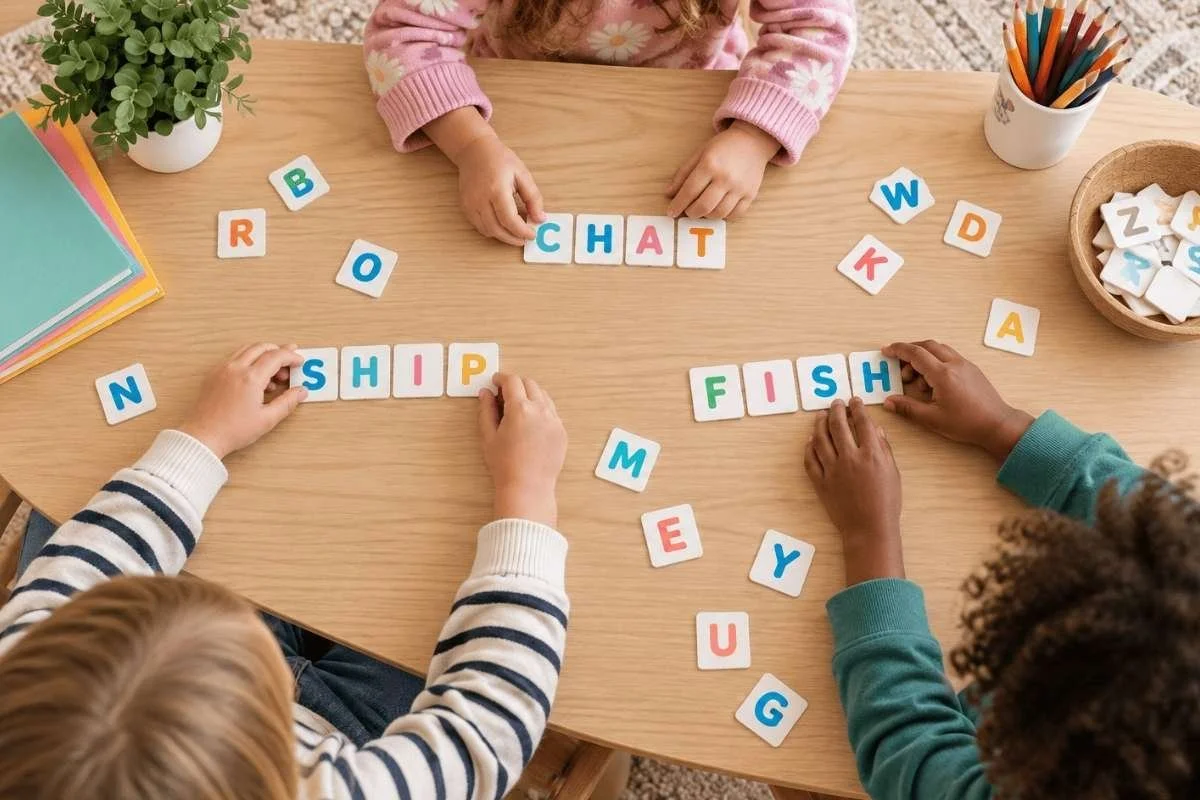
In the word ship, the letters s and h combine to make the single sound /sh/. In chat, c and h combine to make /ch/. In thin, t and h make /th/. Even though you see two letters, you only hear one sound.
At its core, reading is about mapping sounds to letters. We want kids to listen closely to the sounds in a word before we show them how those sounds are represented in print. Sometimes it’s one letter to a sound, other times it’s two letters to one sound. When it’s two letters making one sound, that’s your clue you’re looking at a digraph.
What Are Consonant Digraphs?
Consonant digraphs are made up of two consonants that join together to create a brand-new sound. The sound they make is different from either letter on its own.
For example, the letter s says /s/ and the letter h says /h/. But in the word ship, they combine to make the single sound /sh/. Once children understand that these letters work as a team, decoding becomes much smoother.
Common consonant digraph examples for kindergarteners and first graders include:
SH words: ship, shop, fish, wish, brush
CH words: chip, chat, much, lunch, bench
TH words: thin, this, bath, that, moth
WH words: when, what, whip, whisk
You may also see /ph/ in words like phone or graph, but that pattern is often introduced later. When practicing these, you can gently remind your child that even though they see two letters, they only tap or count that sound once.
What Are Vowel Digraphs?
Vowel digraphs, sometimes called vowel teams, happen when two vowels work together to make one vowel sound. In the word rain, the letters a and i work together to make the long /a/ sound. The same thing happens in words like boat, where o and a represent one sound.
If your child is still learning how vowel sounds work, our short vs. long vowels guide is a helpful place to start before diving into vowel teams.
Here are some common vowel digraph examples:
EE words: see, tree, green, sleep
AI words: rain, mail, sail, tail
OA words: boat, coat, road, soap
EA words: leaf, team, eat, seat
OO words: moon, food, book, look
Some vowel digraphs can also represent more than one sound. The oo in moon sounds different from the oo in book. It can feel random at first, but this is where clear instruction and consistent pattern practice really help.
Are Digraphs the Same as Blends?
This is where things can get a little tricky. Digraphs and blends both involve two letters next to each other, which is why they’re easy to mix up. The difference comes down to sound.
→ A digraph is two letters that make one sound, like /sh/ in ship.
→ A blend is two letters that each keep their own sound, like /s/ and /t/ in stop.
Compare digraph/blend pairs like ship and slip, chat and clap, and thin and twin. Can you hear the difference? When children learn to listen carefully for whether they hear one sound or two, they start relying on sound mapping instead of feeling like they have to guess based on what a word looks like.
Why Digraphs Are a Big Deal in Early Literacy
Digraphs show up everywhere in early reading books. If your child doesn’t understand digraphs yet, words like ship or chat can feel confusing and unpredictable. But once they understand that two letters can represent one sound, reading starts to make more sense.
Knowing digraphs helps with:
Accurate decoding
More confident spelling
Stronger fluency
Less guessing
Unlike spoken language, reading doesn’t develop automatically. It’s something we teach step by step. Digraphs are one of those building blocks that make everything else easier. And once your child understands digraphs, they’re ready to build into deeper spelling patterns.
Ready to explore more sound patterns? Our guide to phonograms is a great next step!
Our Mastering Spelling Rules course is a great way to help your child learn spelling patterns like digraphs. Through guided video lessons, your child can build the tools they need to strengthen reading and writing skills. It’s also packed with storytimes and activities to make learning joyful!
Playful Ways to Introduce Digraphs at Home
Digraph practice doesn’t need to feel overwhelming or overly academic. Short, playful exposure is often the best route. When children experience digraphs through fun, hands-on activities, the concept is much more likely to stick.
Need words to practice with these activities? I've put together a digraph words list with 200+ examples organized by sound, so you can focus on one pattern at a time with your child.
Here are a few simple ways to introduce digraphs at home:
Sound tapping: Say a word like ship and tap once for /sh/. Even though there are two letters, that beginning sound gets one tap.
Magnetic letter building: Build words like chat or rain and slide the two letters together to show they function as a team.
Digraph sorting games: Sort picture cards by beginning sound, such as sh, ch, or th, to strengthen sound discrimination.
Highlighting in books: Underline or lightly highlight digraphs in decodable texts so children see the pattern in real-time.
Silly sound phrases: Create playful phrases like “shiny sheep shop” to reinforce the sound in a memorable way.
Digraph hunts: Pick a digraph and search for it in books, labels, or around the house.
Remember: short, consistent practice is more effective than too-long lessons!
Common Mistakes When Teaching Digraphs
During my years in the classroom, I noticed a few common habits that unintentionally made learning digraphs harder than they needed to be. Making tiny adjustments in how we teach them can make a big difference in how quickly your child catches on.
Here are some common mistakes to watch for:
Focusing on letter names instead of sounds. At this stage, children need strong sound-to-letter connections, not memorization of letter names.
Introducing too many digraphs at once. Master one pattern before layering in several others.
Skipping phonemic awareness practice. Children need to clearly hear the sound before mapping it to letters.
Encouraging guessing from pictures. Reading is about decoding the print on the page.
Relying too heavily on predictable texts. Fluency develops through accurate decoding practice, not memorization of repeated sentence patterns.
Helping Your Child Feel Confident With Digraphs
Digraphs might seem like a tiny piece of phonics, but they’re a big deal in early reading. When children understand that two letters can stand for one sound, a lot of common words stop feeling so tricky and start making more sense.
If your child has been hesitating on words with sh, ch, th, or vowel teams like ai and ee, this might be the concept to revisit. With short, intentional practice and strong listening skills, you can help them build real reading confidence.
Have questions about digraphs or are unsure what to work on next? Come say hi on Instagram @bigcityreaders or leave a comment below. And if you’re building early literacy foundations at home, be sure to explore our other blogs for more support: