100+ Short Vowel Words for Kindergarteners
Short vowel words are some of the very first words kindergarteners learn to read. Words like cat, bed, dog, and sun help children see how letters and sounds work together to form words. These simple patterns give kids their first real practice blending sounds, which is one of the biggest steps toward becoming a confident reader.
If your child is in kindergarten right now, there’s a good chance you’re starting to see this stage at home. Maybe they’re slowly sounding out words during story time or pointing to a word they recognize on the page. These early reading moments might seem small, but they’re a huge part of building strong reading skills.
Have we met? Hi, I’m Miss Beth! I’m an early literacy specialist and the founder of Big City Readers, where I help families raise confident readers using playful, research-backed strategies. Today, we’ll explore everything you need to know about short vowel words for kindergarteners so you can practice them at home with your child.
Understanding Short Vowel Words in Early Reading
In early phonics, short vowel words are words where the vowel makes its short sound. Think of the a in cat, the e in bed, or the u in sun. These sounds show up in many of the first words children learn to read. Not sure how these sounds are different from long vowels? Our short vs. long vowels guide breaks down both patterns with easy examples you can practice together.
Most of these words follow a pattern called CVC, which stands for consonant-vowel-consonant. Words like cat, dog, bed, and pig fit this pattern. Each sound can be heard clearly, which makes them ideal for early decoding practice. If you're working on these sounds with your child, our CVC word lists include 50 beginner-friendly words organized by vowel sound, making it easy to practice one sound at a time.
This is when children start to notice that letters represent sounds and that those sounds can be blended together to form a word. It’s a powerful moment in the reading journey when kids realize that the words on the page aren’t random symbols, but sounds they already know.
If you're wondering how all of these early reading skills fit together, I break down the difference between phonological awareness and phonics and why both are so important when learning to read.
How to Teach Short Vowel Words at Home
If you’re working on short vowel words with your kindergartener at home, let me first say this: you don’t need to turn your living room into a classroom. Some of the best literacy moments happen in small, relaxed ways throughout the day.
What matters most right now is helping your child hear the sounds in a word and blend them together. Once that skill starts developing, their reading skills will naturally grow along with it.
Here are a few simple ways I like to practice short vowel words with kids:
Start with simple CVC words. Words like cat, dog, and sun are easier for kids to hear and blend.
Say the sounds slowly together. Stretch the sounds out so your child can hear each part of the word.
Tap the sounds. Tap your finger for each sound in the word as you say it.
Let your child write the word too.Reading and writing strengthen each other.
Keep practice short and fun. Five minutes of practice is plenty at this stage.
If you'd like a little more guidance, my Kindergarten Ready course walks families through the foundational skills that support early reading. The lessons include phonological awareness, blending sounds, and playful literacy activities that build strong reading foundations.
100+ Short Vowel Words for Kindergarteners
When children practice short vowel words, it can be helpful to group them by vowel sound. This lets kids focus on one sound at a time and start noticing patterns between words. Below are common short vowel words organized by vowel sound. You’ll see them a lot in early readers.
Short A Words
cat
cab
bat
hat
map
cap
jam
sad
bag
dad
fan
lap
tap
rat
mat
van
man
can
pan
ran
tan
Short E Words
bed
red
pen
ten
hen
leg
net
pet
men
get
wet
jet
beg
web
set
led
fed
den
peg
hem
yes
Short I Words
pig
big
dig
fig
wig
hid
kid
lid
lip
dip
sit
hit
kit
mix
fix
zip
pin
win
fin
bin
tin
Short O Words
dog
log
hog
fog
cot
pot
hot
box
fox
top
hop
mop
rod
pod
job
dot
lot
not
got
sob
Short U Words
sun
fun
run
bun
cup
bud
pup
bug
hug
mud
nut
cut
tub
rug
jug
sub
bus
gum
sum
cub
tug
Playful Activities for Short Vowel Practice
One thing I’ve learned after years of classroom teaching is that kids learn best when learning feels like play. Practicing short vowel words doesn’t have to look like worksheets or flashcards. In fact, many kids learn faster when we turn reading practice into something interactive.
Here are a few of my favorite activities:
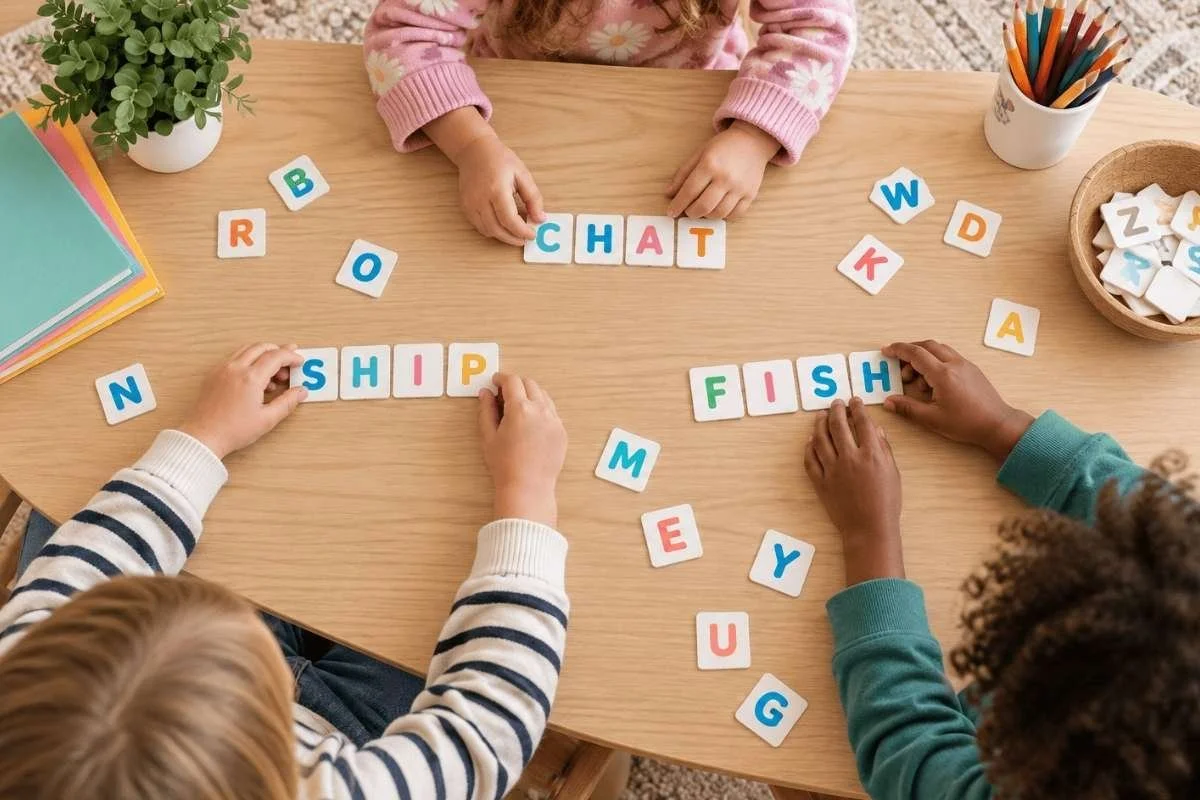
Build words with magnetic letters: Change one letter at a time to make new words like cat, cap, and can.
Sound tapping: Say a word slowly and tap for each sound you hear.
Word hunts during story time: Ask your child to spot short vowel words while reading together.
Draw and label pictures: Have your child draw a dog or a sun and write the word underneath.
Make silly sentences: Create funny sentences using short vowel words like “The dog sat on the log.”
These playful moments make reading practice feel light and positive, which is exactly what we want during the early stages of learning to read.
Common Mistakes Kids Make With Short Vowel Words
If your child struggles with short vowel words, please know this is completely normal. Learning to read is a process, and every child moves at their own pace. Kids are still learning how to slow down, listen to each sound, and blend them together.
Here are a few common mistakes you might see:
Mixing up vowel sounds like pin and pen
Skipping the middle vowel sound and reading cat as ct
Guessing from the picture instead of sounding out the word
Rushing through blending instead of listening to each sound
With a little patience and practice, those tricky moments usually turn into confident reading before you know it.
Helping Your Kindergartener Become a Confident Reader
Short vowel words play a big role in early reading because they give children their first real tools for decoding words on their own. Many of the words kids see in early books follow these same patterns, which means this practice carries over into real reading very quickly.
If your child is working on short vowel words right now, keep going. Those little practice moments really add up. And if you'd like extra support, my Kindergarten Ready course walks families step-by-step through the early reading skills that help decoding start to click.
If you have questions about practicing short vowel sounds at home, send me a DM on Instagram @bigcityreaders or leave a comment below. And for more ways to support your child’s reading journey, be sure to check out our other blogs: