Sight Words for 1st Graders | Word Lists & How to Teach Them
Sight words for 1st graders start appearing everywhere once your child begins reading short sentences and short books. These high-frequency words show up again and again in early readers, so getting familiar with them helps kids read with more confidence.
First grade is often when reading really takes off. Your child may already know letter sounds and some phonics patterns, and now they’re starting to use those skills in real life. Along the way, they will encounter sight words that don’t always follow the usual spelling rules, which can take a little extra practice to understand.
Have we met? Hi, I’m Miss Beth! I’m an early literacy specialist and the founder of Big City Readers, where we make learning to read feel fun and accessible for every child. In this post, we’ll walk through common sight words for first graders and fun, helpful ways to teach them.
What Are Sight Words for 1st Graders?
Sight words are words that appear frequently in early reading materials. Because they show up so often, recognizing them quickly makes reading feel a lot easier.
Most children start learning sight words in kindergarten, where the focus is on simple high-frequency words like the, and, and it. By the time children reach first grade, they start seeing a larger variety of these words while reading sentences and short stories.
Many sight words follow phonics patterns children already know, while others include spelling patterns that may feel a little unexpected. That’s why you may hear them called heart words. Most of the word can be sounded out, but one part needs to be remembered by heart.
How Sight Words Support Reading in First Grade
First grade is such an exciting stage in a child’s reading journey. This is typically the year when children move from sounding out individual words to reading short sentences and even books. It’s a big shift, and it’s completely normal for reading to still feel slow or difficult at times.
Here’s how practicing sight words supports early literacy skills:
Smoother reading: Recognizing common words quickly helps children move through sentences without stopping at every word.
Better comprehension: When kids spend less energy figuring out individual words, they can focus more on understanding the story.
Greater confidence: As reading starts to feel easier, children are more likely to pick up books and keep practicing.
Remember: fluency develops over time. With regular reading practice and encouragement, most first graders grow quickly during this stage.
If you want to better understand how kids learn sight words, you won’t want to miss the latest episode of The Play on Words Podcast. I break down some of the biggest misconceptions about sight words, explain orthographic mapping, and share simple strategies you can use to teach high-frequency words at home. Save the full episode below!
List of Sight Words for 1st Graders
As your child starts reading more, you’ll notice certain words consistently popping up. These are the sight words for first graders that appear most in early readers and classroom texts. The more familiar your child becomes with these words, the easier it’ll be for them to move through sentences and focus on understanding the story.
Below you’ll find a list of common first grade sight words grouped into smaller categories so they will be easier to practice at home. Try starting with a few words at a time to keep practice encouraging and consistent. Feel free to print it out or bookmark this post to use when you’re ready to start your next study session!
Most Common Sight Words
after
again
an
any
as
ask
by
from
give
going
Sight Words That Show Up in Everyday Sentences
had
has
her
him
his
how
just
know
let
live
First Grade Storybook Sight Words
may
old
once
open
over
put
round
some
stop
take
Trickier Sight Words to Practice
thank
them
then
think
walk
were
when
could
every
fly
How Many Sight Words Should First Graders Know?
Many parents wonder how quickly their child should be learning sight words for first graders. It’s a common question, especially when word lists start coming home from school.
The truth is that every child moves at their own pace. Some first graders pick up these words quickly, while others build confidence gradually as their decoding skills continue to grow.
A few helpful things to keep in mind:
First graders are still strengthening their phonics skills.
Sight words are often introduced gradually throughout the school year.
Reading real books helps to naturally reinforce these words.
If your child doesn’t recognize every word on a list yet, try not to worry. With consistent reading practice and supportive instruction, these words will become familiar over time.
How to Teach First Grade Sight Words at Home
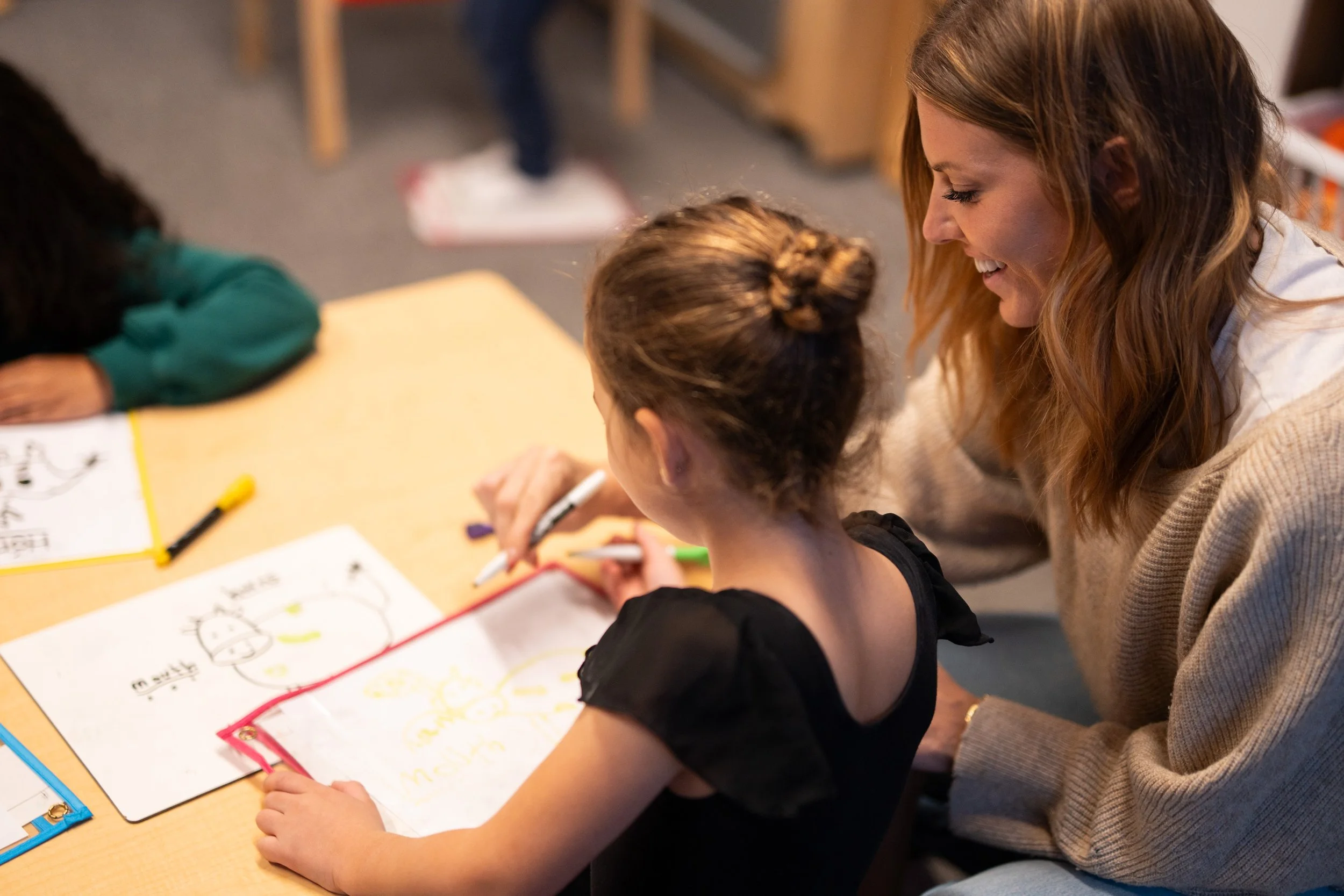
Practicing sight words for first graders at home can be a fantastic way to boost your child’s reading confidence. That said, the way we practice those words matters just as much as the list itself. Many of us grew up memorizing flashcards, but that approach doesn’t help kids understand how words truly work.
I prefer to use The Heart Method, which teaches children to listen for the sounds in a word and identify the part that needs to be remembered by heart. This approach builds lasting reading skills instead of relying on memorization alone.
Here’s what that process can look like at home:
Start with the sounds. Say the word slowly and ask your child what sounds they hear. This strengthens phonemic awareness.
Write the sounds. Draw a line for each sound and help your child match letters to those sounds.
Identify the heart part. If part of the word doesn’t follow the usual phonics pattern, draw a small heart above it to show that it’s the part we remember by heart.
Make it multisensory. Kids remember words better when they see, hear, say, and write them. Try chalk, whiteboards, or writing words in sand or shaving cream.
Connect reading and writing. After your child reads a word, have them write it in a sentence. This helps store the word in long-term memory.
When children understand the structure of a word, they’re far more likely to remember it the next time they encounter it in a book.
Building Strong First Grade Reading Skills
Learning sight words for first graders helps children recognize the high-frequency words that they see repeatedly in early books. As these words become more familiar, reading starts to feel smoother and more natural. That confidence allows kids to focus more on understanding the story instead of stopping at every other word.
If your child is working on these skills right now, First Grade Bootcamp is a great next step. This course includes 20 short, guided video lessons where we practice skills like blending, learning heart words, sentence-building, and strengthening the foundational skills first graders need to become confident readers. I also share my favorite first grade books for every obstacle!
Have any questions about first grade sight words? Send me a DM on Instagram @bigcityreaders or leave a comment below. And for more ways to support your child's reading journey, be sure to check out our other blogs: