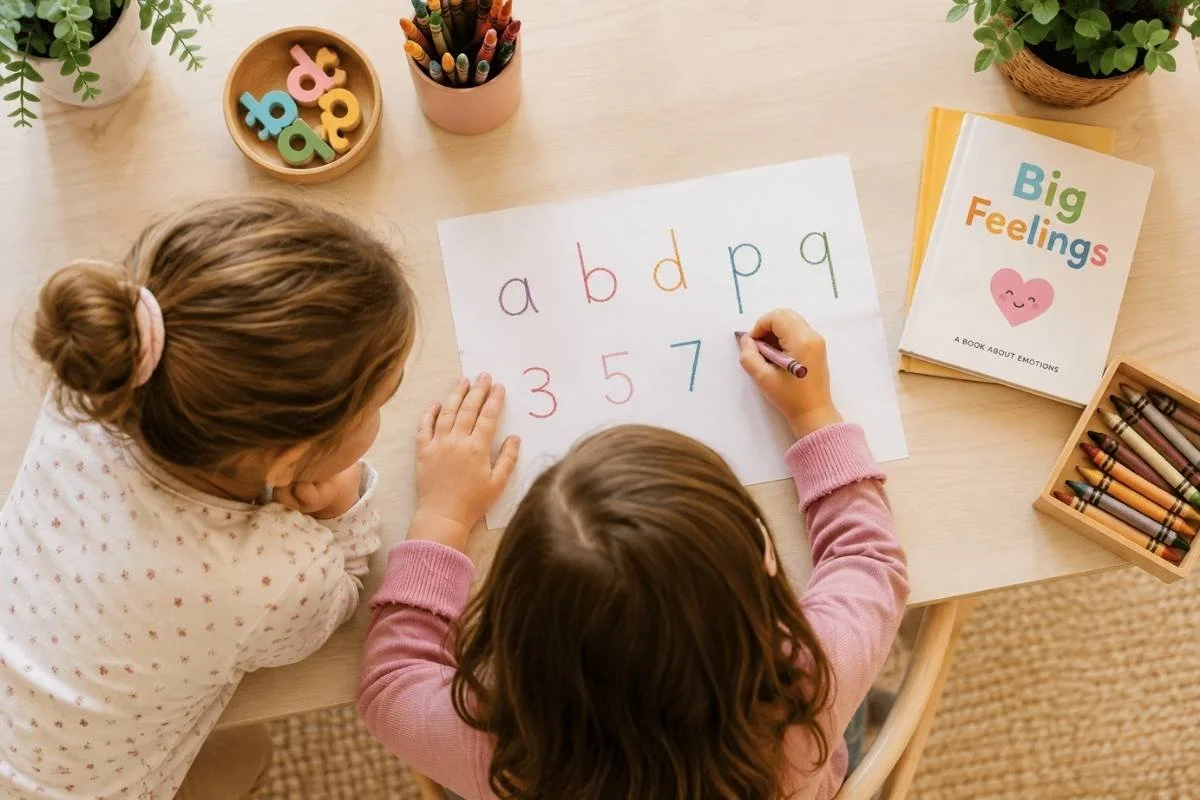
Starting School with Confidence: A Back to School Pep Talk
Back to school season brings up a lot of feelings, and not just for kids. One of the toughest parts of the whole transition? That morning drop off. Whether it's the first day ever or a return after summer, saying goodbye at the door can feel like a mountain to climb. If you're feeling anxious about it, you are not alone, and there is a lot you can do to make it smoother for both of you. Consider this your pep talk.
If you’re new here, hi!I’m Miss Beth, an early literacy specialist and the founder of Big City Readers. Everything we teach is rooted in the Science of Reading and built around simple, play-based strategies. My goal is to make learning to read fun for both you and your child.
Why back to school feels so hard for parents
For a lot of parents, the hardest part of a new school year is not knowing what is happening during the hours you are apart. If you have spent nearly all of your time with your child up to this point, that sudden loss of information can feel disorienting. Psychologists sometimes call this disequilibrium, and it is a completely normal response to a big shift.
When parents feel that discomfort, the instinct is usually to try to control what they can. New sneakers, the right backpack, the perfect notebook. All of that detail chasing is really just a way of reaching for something, anything, that feels manageable in a situation that otherwise feels out of your hands.
The good news is that there is something concrete you can do to prepare your child for that first d, and it has nothing to do with school supplies.
Play is how kids process what is coming
Play is how children make sense of their world. It is also how they build a sense of control before a big change like starting school. Here are a few ways to put that into practice at home.
Practice the drop off routine at your own front door.
Take turns playing teacher and student. Knock, say goodbye, and decide together what the routine will be: three hugs, a high five, then goodbye. Practicing it this way, knocking on the door, saying your goodbyes, and deciding on your special routine, makes the real thing less scary and more predictable. When the actual drop off comes, it will already feel familiar instead of scary.
Play ‘away and back’ with toys.
Hide a small figurine under a napkin at dinner, say goodbye to it, then reveal it again a minute later. Peekaboo works the same way. Both reinforce the idea that grownups always come back, which is exactly the reassurance a child's nervous system is looking for at drop off.
Let your child guess something small about their day.
Will the Play-Doh be pink or yellow this week? Will they choose blocks or books first? Giving an anxious mind a job to do, something playful to wonder about, is often more effective than telling a child to stop worrying.
A young child who struggles to separate does not need to be talked out of it or distracted from it. Sometimes the most powerful thing is simply watching other kids work through the same feelings at their own pace, until they are ready to try it themselves.
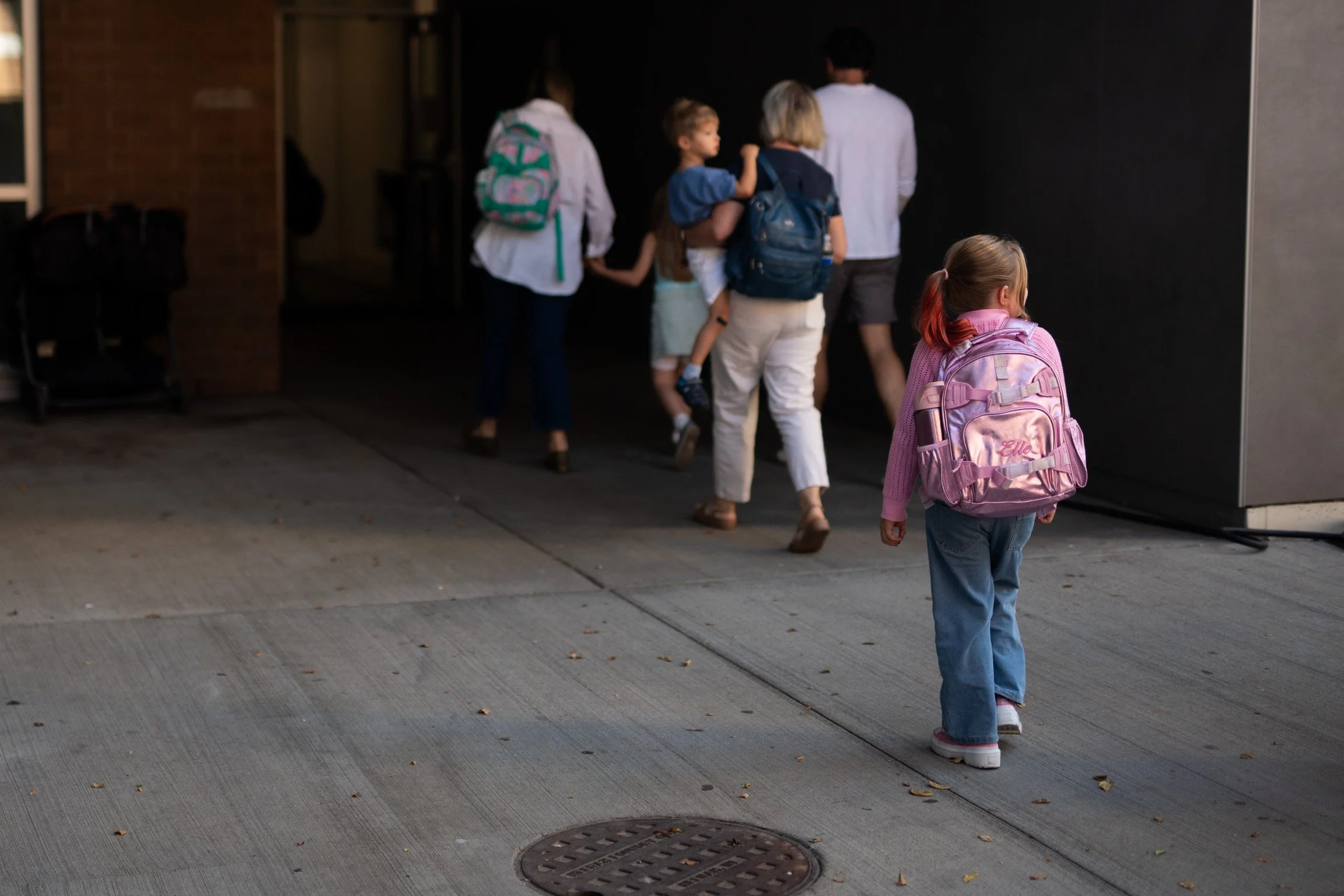
Facing Drop Off Day: What to Expect and How to Prepare
Drop off isn't just a quick wave goodbye. It's a big emotional event where trust is built, fears show up, and your child learns that grownups come back. Knowing that going in can help you meet the moment with more patience, both for your child and for yourself.
One of the most practical things you can do is decide on your goodbye routine ahead of time, then stick to it exactly. If you tell your child you will do one puzzle together, then three hugs, a kiss, and goodbye, follow that plan every single time. Predictability is what builds trust.
This is also where sneaking out comes in. It can be tempting to slip away while your child is distracted, since it feels easier in the moment. But it chips away at the trust your child is trying to build in a brand new environment. Imagine going to a party with your best friend, having them step away for a moment, and then realizing they left without telling you. You would not just feel confused. You would start to wonder if something was wrong.
It is completely fine for a child to cry at drop off. What matters is helping them understand why, and reminding them their teacher already knows how to take care of kids who are new to school.
The real win is not compliance, it's self advocacy
The goal of the early years is not a child who sits quietly and never makes waves. It is a child who learns to say I'm scared, I need help, or I have to go to the bathroom. A child with a big personality now may be the same child who grows into someone who knows how to stand up for themselves and others. That can be genuinely hard to parent in the moment, but it is worth celebrating rather than smoothing over.
Practical tips for a smoother start:
Print a photo of your child's teacher and hang it somewhere visible, like the fridge, so they become a familiar presence before the first day even arrives.
Ask about the assistant teacher too. A child who is struggling to separate often does better attaching to the assistant, since the lead teacher is managing the whole group.
Email the teacher ahead of time, not on day one, with anything that will help them support your child: nicknames, comfort strategies, what tends to help or not help during separation.
Give your child a job. Whether it's checking classmates in at drop off or putting spoons away at home, kids who feel like active, contributing members of their environment settle in faster and act out less.
Tell your child where you'll be. A photo of you at your desk, or a simple description of your day, gives them something concrete to hold onto. It answers the question underneath most separation anxiety: where is my person, and are they safe.
How to Talk to Your Child About Big Feelings at Drop Off
Routines and play help a lot, but kids also need the words to go with the feelings. Giving your child simple language for what's happening at drop off turns an emotional moment into a connection point instead of just something to get through.
A few scripts worth having on hand:
"It's okay to feel sad. I feel that way sometimes too when we say goodbye."
"You're allowed to miss me. Missing someone means you love them."
"I'm proud of you for trying, even when it's hard."
"Your feelings make sense. Let's take one more deep breath together before I go."
Naming the feeling matters more than fixing it. When you say "you feel sad" instead of "don't be sad," you're telling your child their emotion is real and safe to have, not something to hide or rush past.
Active listening helps too. Get down to your child's eye level, repeat back what you're hearing ("You wish I could stay with you today"), and resist the urge to jump straight to reassurance or distraction. Once a child feels heard, the reassurance actually lands. Skip that step, and even the most well meaning "you'll be fine!" can feel dismissive.
Keep it short. A drawn out goodbye conversation right at the door can actually stretch out the hard part. A quick moment of naming the feeling, followed by your predictable goodbye routine, does more than a long explanation ever could.
Understanding Separation Anxiety: When to Seek Extra Support
Most drop off tears fall well within the range of normal. Typical separation anxiety tends to show up as crying or clinging right at the moment of goodbye, then easing within a few minutes once you're out of sight. It usually softens over the first few weeks as your child settles into the new routine, and it doesn't tend to follow them into the rest of their day.
It may be worth a conversation with your child's teacher or pediatrician if the distress is intense and doesn't ease after the first several weeks, if it shows up well beyond drop off (trouble sleeping, frequent stomachaches, reluctance to go anywhere without you), or if your child seems unable to engage or enjoy their day even once you're gone. None of that means something is wrong with your child or your parenting. It just means it may help to bring in an extra set of eyes, whether that's the teacher, your pediatrician, or a child therapist who specializes in this exact transition.
A note on safety before curriculum
Perhaps the biggest idea to hold onto: a child cannot learn anything at school if they do not feel safe first. ABCs, counting, following directions, none of it sticks if a child's nervous system is focused on where their grownup is. This fall, try measuring success differently. Instead of asking whether your child raised their hand or sat still in circle time, ask whether they felt scared and worked through it, or asked for what they needed. That is the real curriculum for a child who is brand new to school.
Whether your child walks in with a smile or clings with tears at drop off, remember this moment is just one step on a bigger journey. You're both learning how to say goodbye, and hello to a new adventure. It is not a reflection of how well you prepared them. Your child is enough exactly the way they are.
Have any questions about supporting your child transition back to school? Send me a DM on Instagram @bigcityreaders or leave a comment below. And be sure to explore our other early literacy blogs next: