Why Is My Child Writing Letters Backwards? (& When It's Actually Normal)
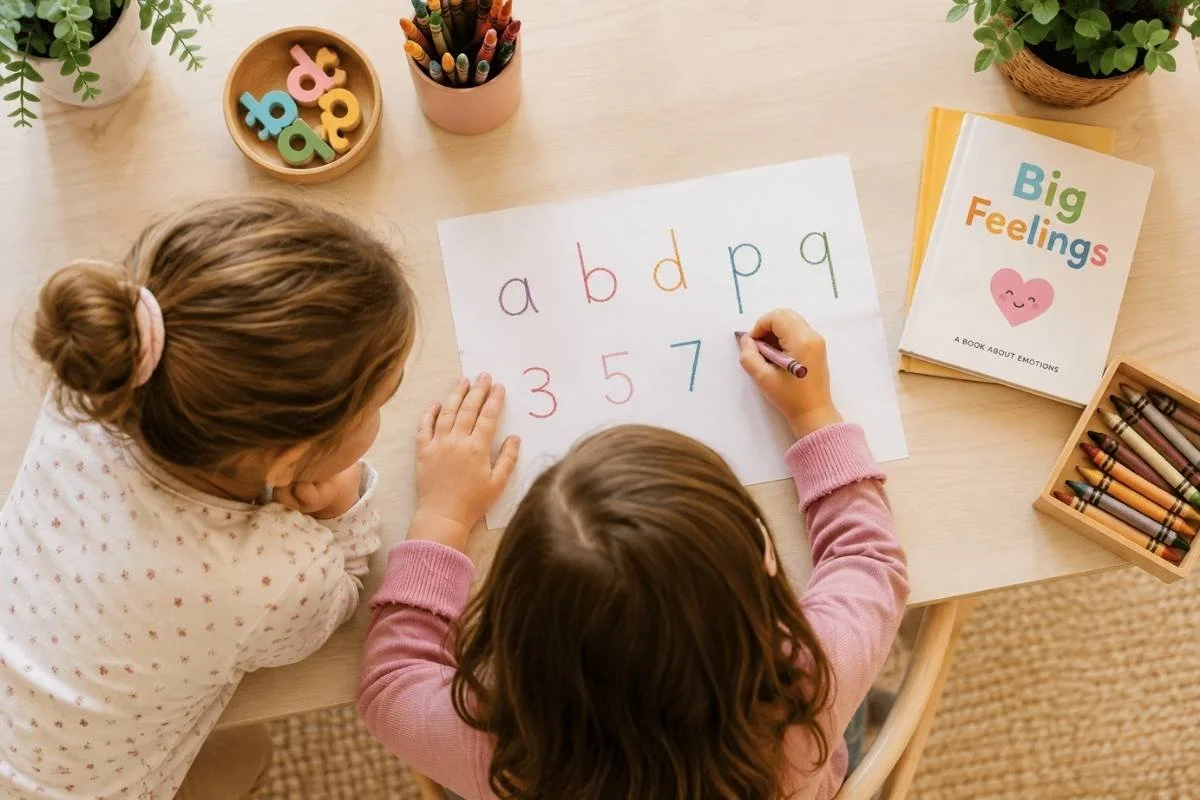
Is your child writing letters backwards? Maybe b and d keep trading places, or that 3 somehow ends up facing the wrong direction…again. Before you worry, know that letter reversals are incredibly common while young kids are learning to read and write.
Those backwards letters usually taper off as their reading and handwriting skills develop. So instead of aiming for perfect letters right away, let’s look at what’s normal for your child's age, why reversals happen, and a few simple ways you can help at home.
If you’re new here, hi! I’m Miss Beth, an early literacy specialist, founder of Big City Readers, and host of thePlay on Words podcast. I help children build strong reading and writing skills through play-based strategies that make learning an enjoyable experience for both of you.
Yes, Writing Letters Backwards Can Be Completely Normal
When kids first learn letters, their brains are doing something pretty tricky. They already know that an object is still the same object when it faces a different direction. A shoe is still a shoe whether it points left or right!
But letters don't always work that way. Flip a b around, and suddenly it's a d. Turn a p the other way, and you've got a q. Young children have to learn that direction matters for these little symbols in a way it doesn't for most things they see every day.
That's one reason reversing letters and mixing up similar-looking letters is so common for early readers and writers. It’s not necessarily that your child forgets what a “b” looks like. Usually, it’s simply that their brain is still learning to automatically notice and remember its orientation.
Want to hear more about why kids reverse letters? I break this down even further on the Play on Words podcast. Listen to the full episode below for more on what’s happening when kids flip letters and how you can support them as they learn.
When Are Letter Reversals Normal? What’s Typical by Age
There isn’t one age when letter reversals suddenly disappear. They’re common when children start writing and should gradually happen less often as their reading and writing skills develop.
Here’s a quick look at what letter reversals can look like at different ages:
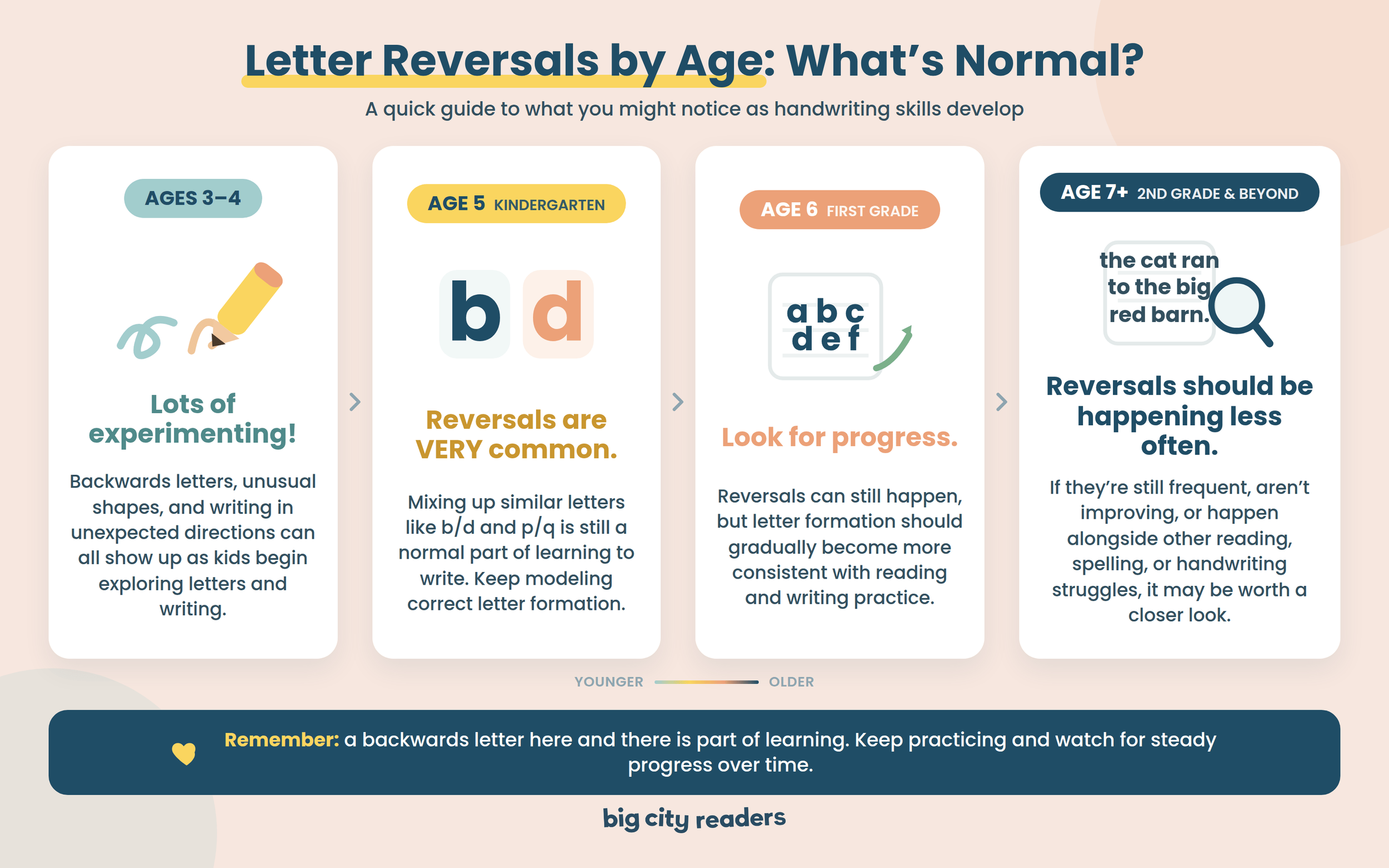
So if a backwards b or flipped 3 sneaks onto the page, don’t sweat it! Keep modeling the correct formation and look at how your child’s writing is progressing over time.
Wait… What If My Child’s Writing Numbers Backwards, Too?
Letters aren't the only symbols that get flipped around. It's also common to see young kids writing numbers backwards, especially numbers like 3, 5, 6, 7, and 9.
Just like with letters, your child is still learning that the direction of a written symbol matters. A backwards 3 might look really similar to a regular 3 to a new writer, but they eventually have to learn which orientation we've agreed means “3.”
So if your kindergartener occasionally flips numbers and reverses letters, you don't need to treat those as two separate problems. Use consistent language when you practice and give their brain and hands plenty of opportunities to learn the right pattern.
B or D? P or Q? The Letters Kids Reverse Most
Some letters practically beg to get mixed up. They’re made from similar lines and curves, and young writers are still learning that changing the direction of those shapes can create a completely different letter.
Here are a few of the letter reversals you’re most likely to see:
b and d. This is the BIG one. They have the same basic shapes facing opposite directions, which makes b and d confusion especially common for early writers. Try this silly cue next time: “b has a belly, d has a diaper.”
p and q. Another easy pair to flip because they look so similar. Consistent practice with where to start and how to form each letter can help your child keep them straight.
s, z, and j. Letters don't need a look-alike partner to end up backwards. Kids sometimes reverse these while they're still learning proper direction and movement.
Keep showing your child how to follow consistent letter patterns and give them plenty of opportunities to practice. As those movements become more automatic, you should start seeing fewer reversals.
How to Help With Letter Reversals at Home (No Worksheets!)
If your child keeps reversing letters, your first instinct might be to print a handwriting worksheet and have them write that letter 20 times. But more writing isn't always the answer. We want to help their brain and their hand learn how that letter is formed.
And thankfully, that can be a lot more fun than filling a page with b's!
Here are a few ways to practice:
Start BIG. Before asking your child to form a tiny letter with a pencil, have them skywrite it with their whole arm or make giant letters with sidewalk chalk. Bigger movements make it easier to focus on the shape and direction of the letter.
Add some texture. Practice forming letters in sand, salt, shaving cream, or even a steamy bathroom mirror. Have your child say the letter and its sound as they write it to bring more than one sense into the practice.
Use the same formation cue. Show your child where to start and talk them through the strokes in the same order each time. Consistency helps the movement get more automatic instead of making them figure out how to build the letter from scratch.
Focus on ONE tricky letter. If b and d are getting mixed up, resist the urge to drill them side by side over and over. Spend some focused time getting really comfortable with one letter's shape, sound, and formation first.
Give them a silly memory trick. This is where “b has a belly, d has a diaper” earns its keep! A memorable visual or phrase can give your child something to reach for when they can't remember which way a letter faces.
Practice in short bursts. Five minutes is plenty. Write a few letters in shaving cream, make them with play dough, or practice while you're already coloring together.
Show them how to write the letter correctly. If your child writes a backwards b, say, “Let's try that one again. Watch where I start!” Then model it and let them try.
Not sure where your child's handwriting skills should be right now? My FREE Handwriting Development Guide walks you through what to expect from birth through age 8, what’s completely normal along the way, and simple activities you can work through together.
When Should I Worry About Letter Reversals?
A backwards b here or a flipped 3 there doesn't tell us much on its own. We want to look at your child's overall reading, writing, and handwriting development. It's worth checking in with your child's teacher or another appropriate professional if you notice things like:
Reversals are still frequent as your child gets older and aren't decreasing with practice.
Your child is also having difficulty remembering letter sounds, rhyming, sounding out words, spelling, or reading.
Handwriting itself seems unusually difficult, including trouble with pencil grip or copying basic shapes.
Writing causes pain or quick fatigue.
Your child regularly avoids writing or gets especially frustrated by it.
Their handwriting skills don't seem to be progressing over time.
Remember: we're looking for patterns, not one backwards letter. If something does feel off, bringing it up doesn't mean you're jumping to a diagnosis. You're just gathering more information about where your child might need some extra support.
And if you're noticing reading struggles along with the reversals, take a look at my guide to the early signs of dyslexia to understand what else is worth paying attention to.
Keep Building Confident Little Writers
If your child's page has a backwards b, a wonky 5, and a d that somehow became a p, remember you're looking at a skill that's still developing.
Keep modeling the correct formation for them and look for progress instead of perfect letters. Those little hands are learning how to turn the letters and words in their heads into marks on a page, and that takes consistent practice!
And if you'd like more guided support, my Ready to Write course helps early writers build the foundational skills they need for confident writing. We work on letter formation and early writing skills through playful, hands-on video lessons you can watch together.
Have any questions about letter reversals or handwriting development? Send me a DM @bigcityreaders or leave a comment below! And be sure to explore our other early literacy blogs for more ways to support your child at home: