Is My Child Ready to Read? 7 Signs to Look For
The signs your child is ready to read show up way before they ever sound out their first word. They’re asking what the cereal box says, pointing out the first letter of their name everywhere you go, paying attention to letter sounds, or “reading” their favorite picture book to you.
Those little things are actually a pretty big deal! Once you know what to look for, you’ll start noticing all the ways your child is building the skills they’ll need to become a strong reader. Let’s break down the early signs of reading readiness and how to prepare for what comes next.
If you’re new here, hi! I’m Miss Beth, an educator and learning specialist, founder of Big City Readers, and host of the Play on Words podcast. I use the Science of Reading and simple, play-based strategies to help parents understand how reading develops and support it at home without pressure.
What Age Do Kids Start Learning to Read?
Kids start learning to read long before they sound out their first word. Every time you read, write, sing, talk, or play together, your child is building the foundation for reading.
Some children begin decoding words around age 4, while others put those pieces together closer to kindergarten or first grade. There isn’t one exact age when every child is suddenly “ready.”
Wondering how those ages line up with school? Our guide to ages by grade level shows when children typically start kindergarten, first grade, and beyond.
Instead of comparing your child to another, pay attention to the reading readiness skills they’re developing. Their interest in books, ability to hear sounds in words, letter recognition, and understanding of stories can tell you much more about what they’re ready to learn next.
Before They Read Their First Word, THIS Is Happening
Before a child looks at the word “cat” and sounds out /c/ /a/ /t/, they’re learning that the words we say can be broken into smaller sounds.
They’re noticing that letters have names and also represent sounds. They’re figuring out that words on a page carry meaning, and that words like cat and hat sound suspiciously alike.
These are called pre-reading skills or pre-literacy skills. Your child doesn't need to master every one before they start learning to read. They’re building these skills little by little through songs, books, chats, and play.
So if your child isn't sounding out words yet, that doesn't mean nothing is happening. Their pre-reading brain is already VERY busy!
7 Signs Your Child Is Ready to Read
So, how do you know if your child is ready to read? Most of the signs show up naturally while you're reading together, playing in the car, or going about your day.
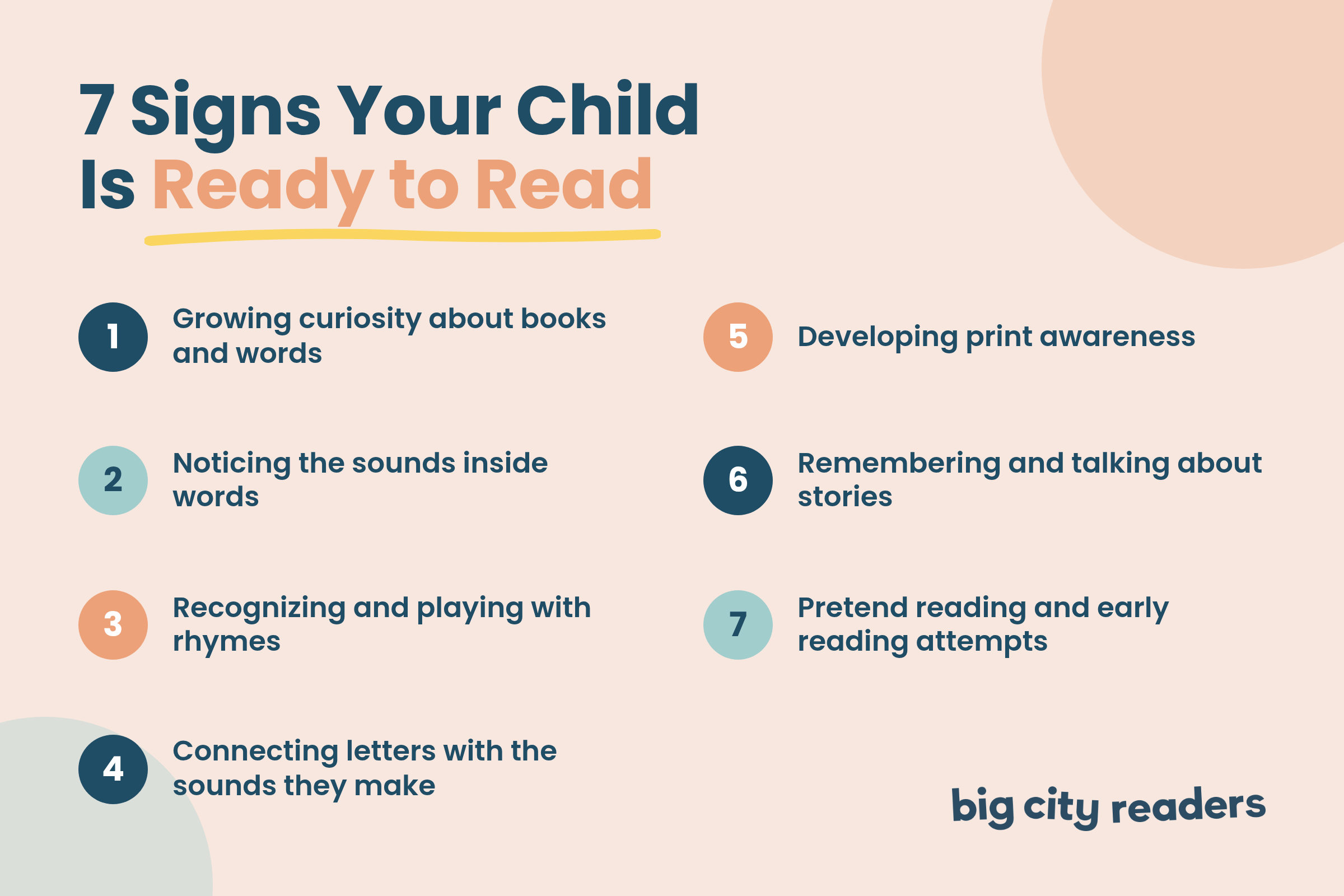
Here are seven signs your child is ready to learn to read:
Growing curiosity about books and words
Noticing the sounds inside words
Recognizing and playing with rhymes
Connecting letters with the sounds they make
Developing print awareness
Remembering and talking about stories
Pretend reading and early reading attempts
They might be doing some of these already while still working on others. Remember: we're looking for signs, not checking off requirements!
Growing Curiosity About Books & Words
“Mom, what does THAT say?”
If you're suddenly answering this question all day long, pay attention! Asking what words say, pointing out familiar letters on signs, or bringing you a favorite book again shows they're starting to understand the letters and words around them actually mean something.
Noticing the Sounds Inside Words
When your child announces that Mom and milk both start with /m/, it may feel like a tiny observation. In the reading world, it's a BIG one! Before kids can connect letters to sounds on a page, they need to hear and play with sounds in spoken words.
This is phonological and phonemic awareness, and you might notice it when your child identifies beginning sounds, claps syllables, or starts blending sounds together.
Not sure how phonological awareness is different from phonics? Listen to this episode of the Play on Words podcast, where I break down what each skill means and why your child needs both.
Cat, Hat, Bat…Rhyming Is Starting to Click
Recognizing and making rhymes means they're paying attention to the sounds within words, which is an important pre-reading skill. Try asking, “Which word rhymes with cat: hat or dog?” or start a silly rhyming game in the car.
These easy rhyming activities for kids are another fun way you can practice!
Letters Are More Than Just the ABC Song
Knowing the alphabet song is wonderful, but singing A-B-C-D-E-F-G and understanding what those letters actually do are two different skills.
Maybe your child recognizes the letters in their name or points to an M and shouts, “That's for MOM!” Those early letter-sound connections are what we're looking for. They don’t need to know all 26 letters and sounds before they're ready to start learning to read.
Print Awareness (Books Are Making More Sense)
Holding a book right-side up, turning the pages in order, and knowing where the story starts are all things that seem automatic to us, but kids have to learn them!
Print awareness means they're starting to understand how books and written language work, including that the words on the page are telling the story. Recognizing their name on a cubby or the stop sign down the street can be part of that growing understanding, too.
Remembering and Talking About Stories
Reading isn't only about getting the words right. We also want kids to understand what those words are telling them. Retelling a story, remembering a favorite character, predicting what happens next, or catching you when you skip a page are all signs of early comprehension.
An easy way to build this skill is to pause while you're reading and ask, “What do you think is going to happen next?”
Pretend Reading and Early Reading Attempts
If your child picks up a favorite book and confidently “reads” the entire thing from memory, let them! Pretend reading and early attempts might also look like recognizing their name, pointing to words, or trying to sound something out.
They don't have to get it right. They're experimenting with everything they're learning about how reading works, and that's a fantastic sign to see.
What If My Child Isn’t Showing All 7 Reading Readiness Signs?
Maybe your child loves books but couldn't care less about letters yet. Or they know every letter in their name, but rhyming still stumps them. That doesn't mean they're not ready to learn.
Think of these reading readiness signs as skills that develop over time, not seven boxes your child has to check before you can move forward. You can meet them right where they are, practice the skills that are still developing, and keep building from there.
Not sure what to work on? My Kindergarten Ready course helps you build the foundational skills they’ll need through short, play-based lessons you can do together in about 10 minutes a day. We’ll take it one reading skill at a time!
How to Help Your Child Start Learning to Read
Start with the things you're probably already doing! Read together, play rhyming games, talk about the sounds you hear in words, point out letters in everyday life, and ask questions during storytime. Ten playful minutes can do a lot more than turning reading practice into a chore.
As their skills grow, you can start helping them connect sounds to letters and eventually blend those sounds into words. Learning to read happens in a sequence, so knowing what to practice and when can make it easier for both of you.
Reading Readiness FAQs
What Are the Most Important Pre-Reading Skills?
Some of the most important pre-reading skills include phonological and phonemic awareness, letter recognition, letter-sound knowledge, print awareness, vocabulary, and listening comprehension.
Does My Child Need to Know All Their Letters Before Learning to Read?
No! Your child does not need to have all 26 letters and sounds memorized before they start learning to read. Letter recognition and letter-sound knowledge can continue developing as they practice other early reading skills.
Should a 4-Year-Old Know How to Read?
Most 4-year-olds are still developing the pre-literacy skills they'll eventually use to read, and there’s a wide range of what's normal at this age. Instead of expecting independent reading, look for growing interest in books, sounds, rhymes, letters, and stories.
Should My Child Be Reading Before Kindergarten?
No, children do not need to enter kindergarten already reading on their own. Strong kindergarten readiness includes foundational language and literacy skills that they'll keep developing in the classroom.
Your Little Reader Is Already Getting Started
The next time your child points out a letter on a sign, makes up a silly rhyme, or “reads” you the book you've read together 100 times, you'll know there's more happening than meets the eye.
Those little moments are the start of your child’s early reading journey. Keep encouraging them, playing with words and sounds, and reading together. Your child is building their way toward that very exciting first “I can read it!” one skill at a time.
Have any questions about reading readiness or teaching your child to read? Send me a DM @bigcityreaders or leave a comment below! And be sure to explore our other blogs for more reading tips and ways to build strong reading skills at home: