Digraph Words List: 200+ Words for Early Readers
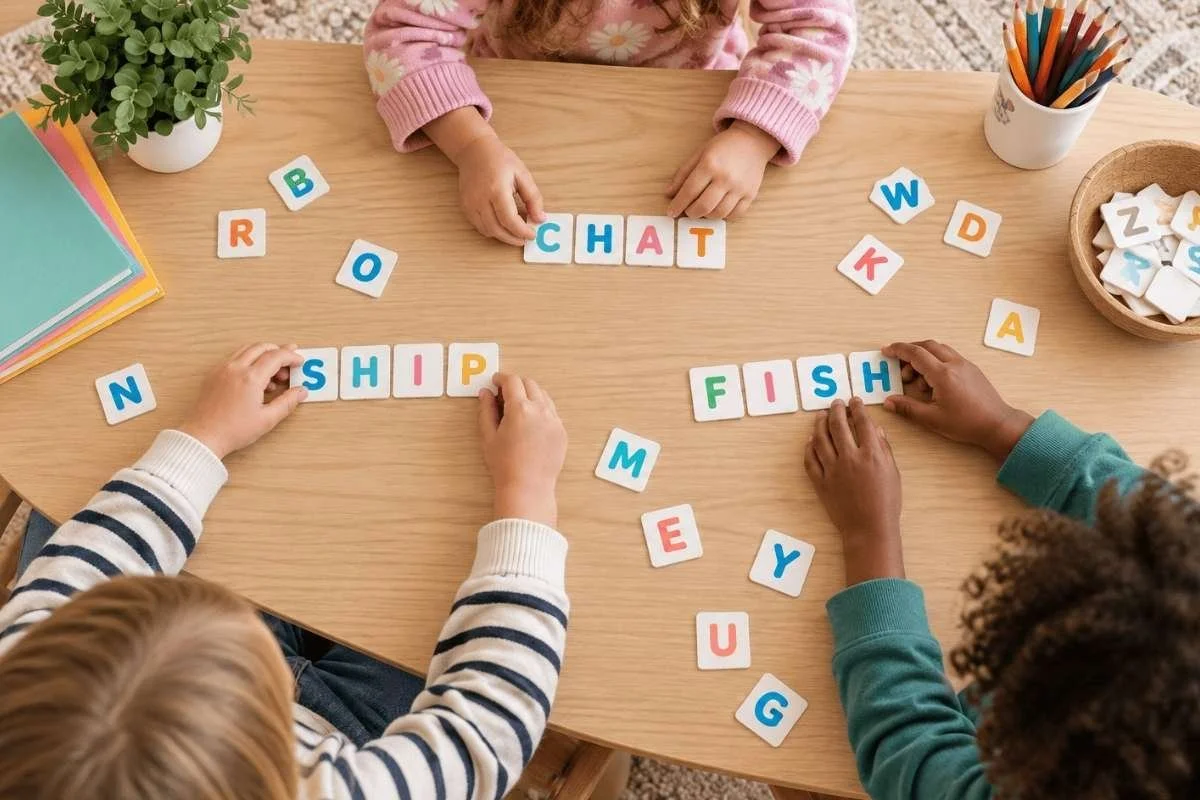
Looking for a digraph words list to practice with your child? Save this one! With digraphs, two letters work together to make one sound, like sh in ship or ch in chat, which means there are lots of great words your early reader can practice as they learn each pattern.
I’ve gathered 200+ digraph words and sorted them by sound, along with play-based ways to practice them together (without any worksheets!). Start with the pattern your child is working on, then come back when you’re ready for the next one.
If you’re new here, hi! I’m Miss Beth, an early literacy specialist, founder of Big City Readers, and host of the Play on Words podcast. I teach parents how to build strong early reading and writing skills through playful, science-backed methods that get children excited to learn.
Meet the Digraphs Your Child Will See Most
Before we jump into the full digraph words list, here’s a quick look at some of the most common digraphs your child will come across while learning to read.
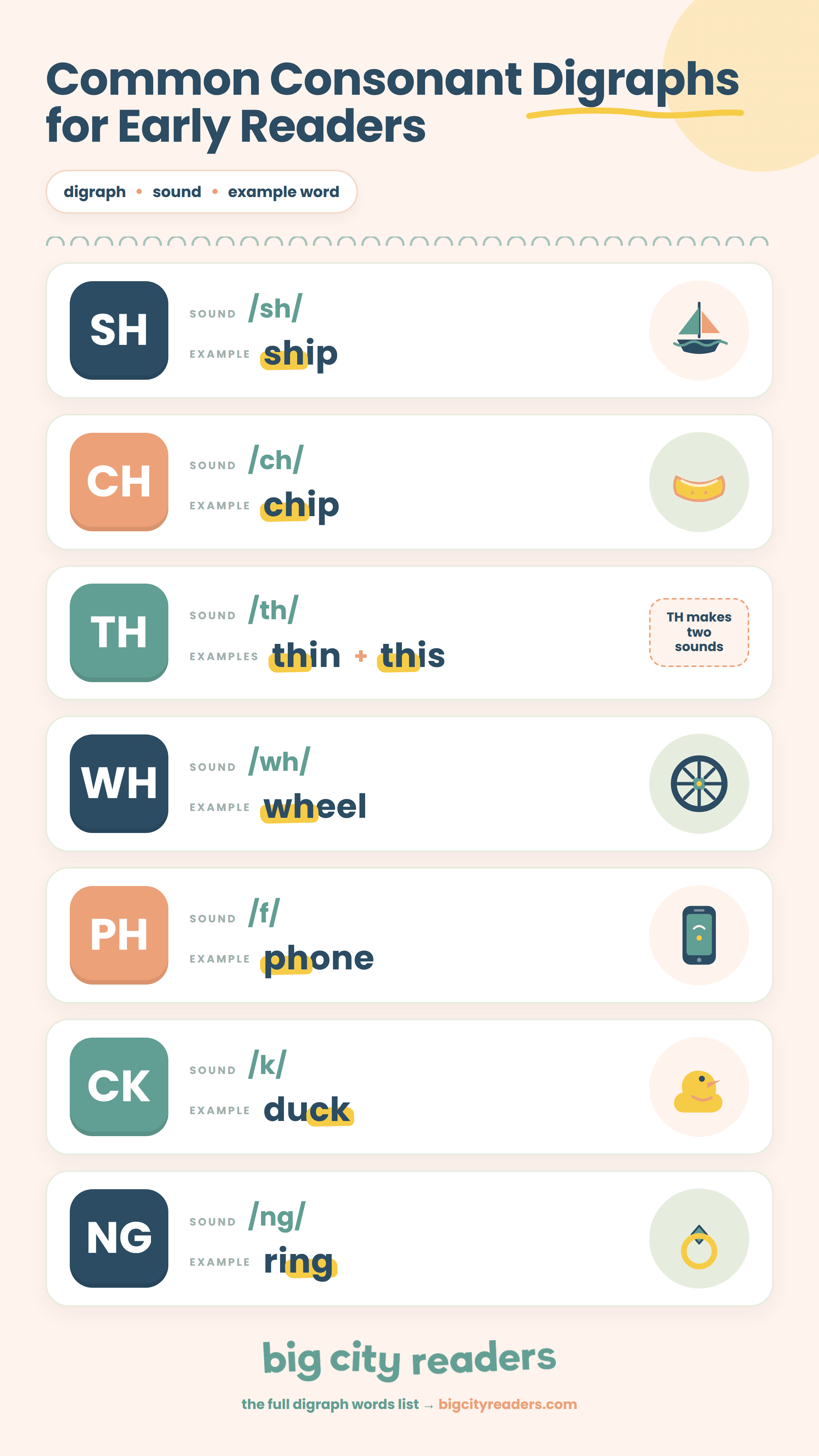
Consonant digraphs are two consonants that work together to make one sound, while vowel digraphs (often called vowel teams) are two vowels working together to represent one sound.
Want to dig deeper into how digraphs work? Start with my full guide to what digraphs are and how they’re different from blends, then come back here when you’re ready to practice!
Consonant Digraph Words
Let’s start with consonant digraphs! You’ll see these patterns at the beginning and end of words, so I’ve included plenty of examples of both. Start with one digraph at a time and choose a handful of words that feel doable for your child.
SH Words
The sh digraph makes the /sh/ sound you hear at the beginning of ship and the end of fish.
Beginning SH words:
ship, shop, shell, shoe, shark, shirt, sheep, shut
Ending SH words:
fish, wish, dish, brush, trash, wash, cash
CH Words
The ch digraph makes the /ch/ sound in words like chip and lunch.
Beginning CH words:
chip, chat, chin, chop, cheese, chair, cheek
Ending CH words:
much, rich, lunch, bench, bunch, peach, beach
TH Words
It gets a little interesting here: th can make two sounds!
Compare the th in thin with the th in this. Your child doesn’t need a big technical explanation to practice them. Saying the words aloud together can help them hear the difference.
TH words:
thin, think, thick, thumb, thorn, thank, this, that, them, then, bath, math, moth, with, cloth
WH Words
You’ll usually spot the wh digraph at the beginning of a word, especially in some of the question words your child sees and uses all the time.
WH words:
wheel, wheat, when, whale, what, white, which, whisk, whip, while, whistle, wheelbarrow
PH Words
The ph digraph represents the /f/ sound, which is why phone starts with the same sound you hear at the beginning of fish.
PH words:
phone, photo, graph, phonics, dolphin, elephant, alphabet, trophy, nephew, gopher
CK Words
You’ll typically find ck at the end of a word, where the two letters work together to represent the /k/ sound.
CK words:
duck, sock, rock, lock, back, pack, sick, kick, black, clock, truck, stick, brick, snack, chick
NG Words
The ng digraph often shows up at the end of words and represents the /ng/ sound you hear in ring and song.
NG words:
ring, king, sing, wing, song, long, bang, hang, lung, sting, bring, swing, strong, thing
Vowel Digraph Words (Vowel Teams)
Now let’s move on to vowel digraphs, which you’ll also hear called vowel teams. Just like the consonant digraphs we covered above, two letters team up to represent one sound.
Some vowel teams can make more than one sound depending on the word (because English likes to keep us on our toes!), so don’t worry about tackling every list at once. Stick with the pattern your child is learning and build from there.
AI Words
The ai vowel team commonly makes the long A sound, like in rain.
AI words:
rain, mail, tail, sail, nail, wait, paint, train, chain, snail
AY Words
The ay vowel team also commonly makes the long A sound. You’ll often see ay at the end of a word or syllable.
AY words:
day, say, may, way, pay, play, stay, tray, gray, spray
EE Words
The ee vowel team commonly makes the long E sound you hear in see and tree.
EE words:
see, bee, feet, seed, tree, green, sleep, sheep, three, street
EA Words
The ea vowel team usually makes the long E sound, like in eat and team.
EA words:
eat, sea, tea, leaf, team, meat, read, clean, dream, peach
OA Words
The oa vowel team commonly makes the long O sound, like in boat.
OA words:
boat, coat, goat, road, soap, loaf, float, toast, coach, throat
OW Words
Here’s another pattern that can make more than one sound. Ow can make the long O sound in snow or the /ow/ sound in cow.
OW words with the long O sound:
snow, grow, low, slow, show, glow, blow
OW words with the /ow/ sound:
cow, how, now, down, town, brown, crown
OO Words
The oo vowel team can also make two common sounds. Compare the oo in moon with the oo in book.
OO words like moon:
moon, food, room, soon, pool, cool, school, spoon
OO words like book:
book, look, cook, foot, good, wood, hook
OU Words
You’ll hear the ou vowel team making the /ow/ sound in words like out and cloud.
OU words:
out, loud, cloud, round, sound, found, mouth, house, count, shout
OI and OY Words
Oi and oy can both represent the /oy/ sound. You’ll often see oi in the middle of a word and oy at the end.
OI words:
oil, boil, coin, join, soil, point, spoil
OY words:
boy, toy, joy, soy, enjoy, annoy
AU and AW Words
Au and aw can both represent the /aw/ sound you hear in words like sauce and saw.
AU words:
sauce, pause, haul, fault, cause, launch
AW words:
saw, paw, jaw, law, draw, straw, crawl
EW Words
The ew vowel team can represent the sound you hear in words like chew or new.
EW words:
new, few, dew, chew, grew, blew, flew, stew, crew
Related Spelling Patterns to Know: Trigraphs
As your child learns more letter-sound patterns, they’ll also start running into trigraphs. These are similar to digraphs, except instead of two letters working together, three letters work together to represent one sound.
A few common trigraphs include:
tch → catch, match, watch, kitchen, patch
dge → bridge, badge, edge, judge, fudge
igh → light, night, high, right, sight
These aren’t technically digraph words, but they’re helpful to recognize as your early reader moves into more advanced phonics patterns.
Digraph Words by Grade
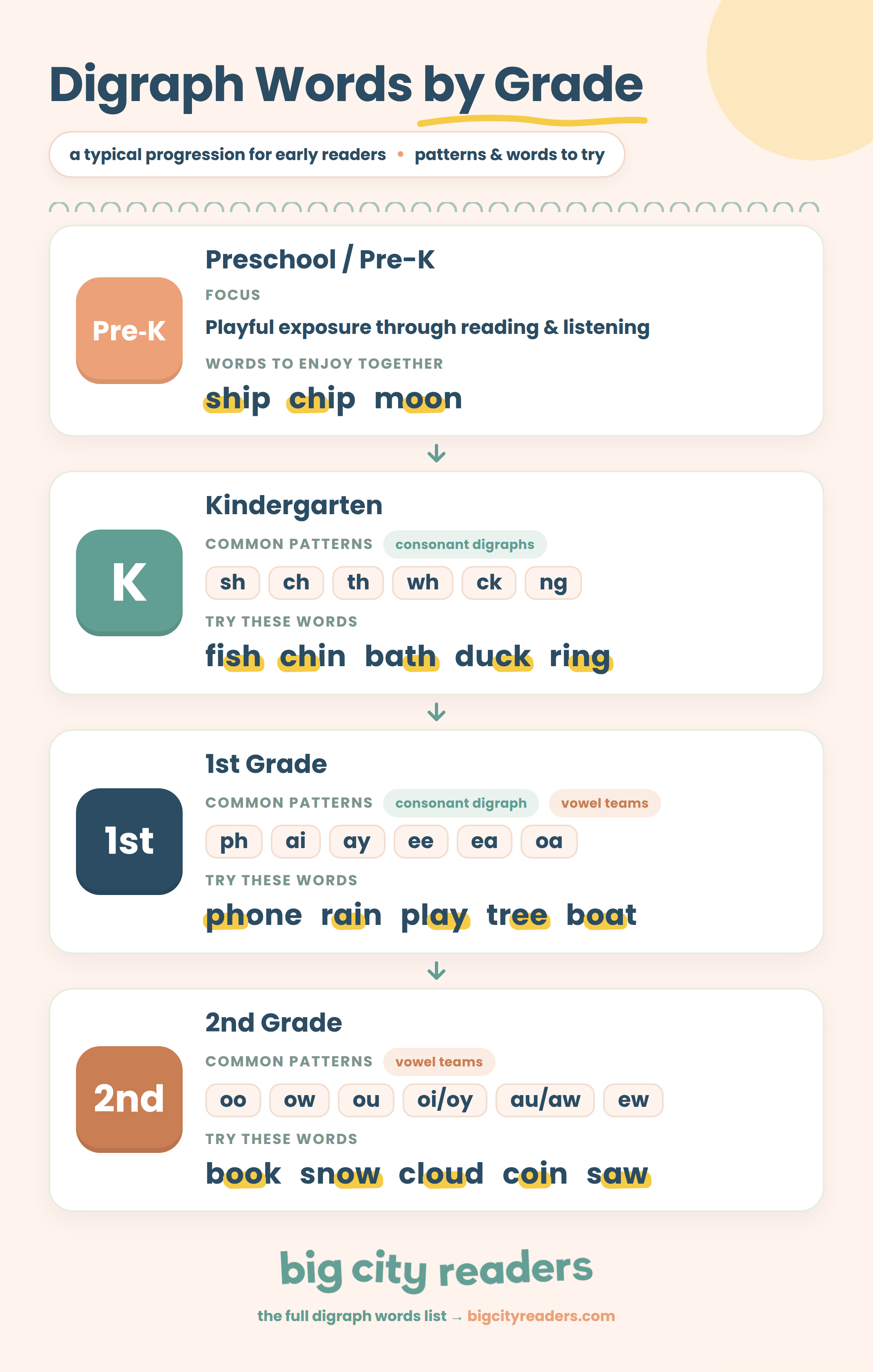
Wondering which digraphs your child should be working on? While every school and reading curriculum is a little different, children typically move from common consonant digraphs into vowel teams and more complex sound patterns as their reading skills grow.
Use the guide below as a general starting point, but remember that every child moves at their own pace, and that’s perfectly normal!
Fun Ways to Practice Digraph Words (No Worksheets Needed!)
Now that you have plenty of digraph words to choose from, let’s put them to use! Pick the pattern your child is working on and try one of these easy, play-based activities:
Go on a digraph hunt. Pick a digraph like sh and look for it in books, signs, cereal boxes, or anywhere else you go. Have your child read the word or say the sound whenever they spot one.
Sort words by sound. Write a few words on sticky notes and mix them up, then have your child sort them into groups like sh, ch, and th. Start with two digraphs and add more when they’re ready.
Make silly sentences. Choose one digraph and challenge yourselves to fit as many words as possible into one ridiculous sentence. The sheep wore shoes to the shop is way more fun to read than a worksheet!
Try a digraph of the day. Choose one pattern and see how many times you can spot, read, or think of a word with it throughout the day. You might be surprised how quickly your child starts pointing them out before you do!
Sound map the words. Grab letter tiles or magnetic letters and build a simple word like ship, saying each sound as you go. Help your child notice that the s and h work together to represent one sound.
Keep Building Your Child’s Reading and Spelling Skills
Once your child starts recognizing digraphs, they have so many more words they can read and spell! Keep building on that momentum by practicing one pattern at a time and giving them lots of chances to see, hear, build, and play with the words.
If you want more support teaching spelling patterns in a way that makes sense to kids, check out my Mastering Spelling Rules course. We’ll take those tricky spelling rules and turn them into simple, playful strategies your child can remember and use.
Have any questions about digraph words or other spelling patterns? Send me a DM @bigcityreaders or leave a comment below; I’d love to hear from you! And be sure to explore our other blogs for more early literacy tips and activities: