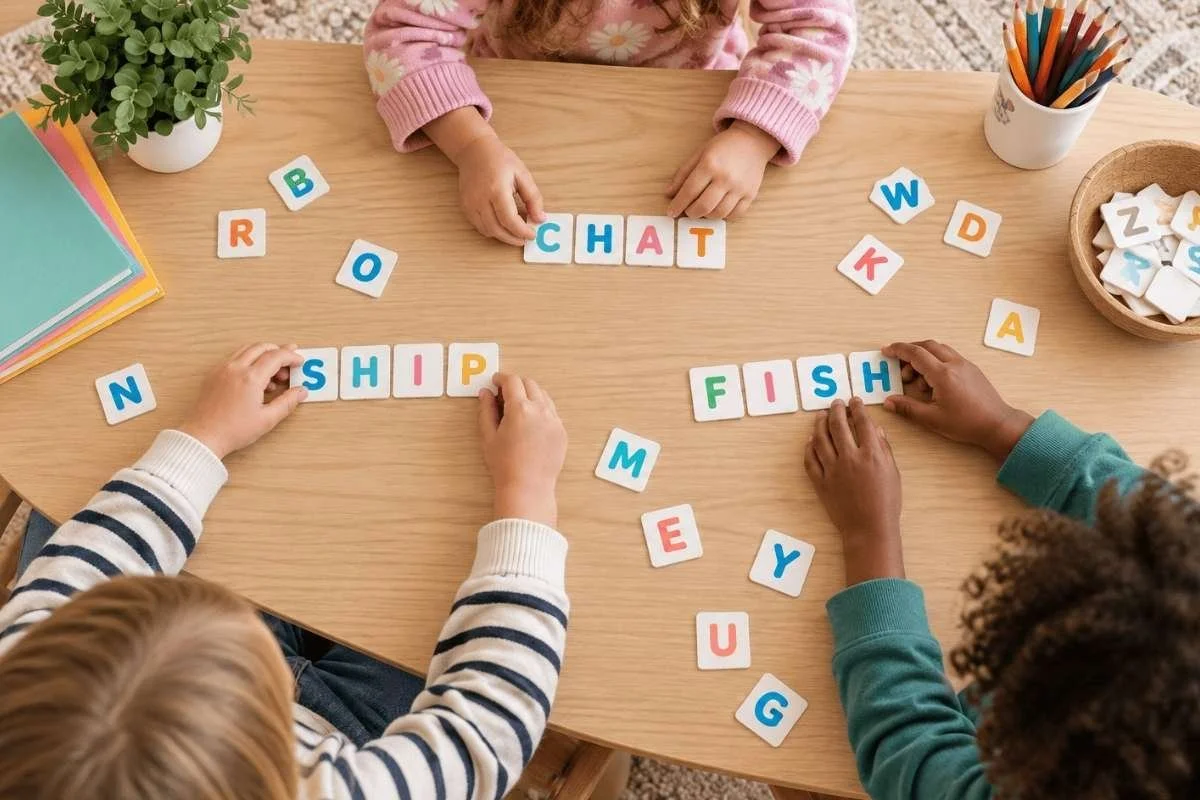
50+ Rhyming Words With You | Easy Word Lists for Early Readers
Has your child practiced rhyming words with you at home yet? If you’re raising an early reader, this can be a great way to support their learning journey. Realizing that certain words share the same ending sound is an important step that will support their ability to decode words later on.
Rhyming practice doesn’t have to feel like a lesson. It can happen during storytime, in the car, or even through silly made-up words that make your child laugh on the way to school. In this post, you’ll find 50+ rhyming words with you, plus simple (and fun) ways to practice them at home.
If you’re new here, hi! I’m Miss Beth, an early literacy specialist and the founder of Big City Readers. I help parents support early reading and writing through playful, research-backed strategies rooted in the Science of Reading.
Why Rhyming Is One of the First Steps to Reading
Rhyming is one of the earliest ways children begin to notice patterns in language. When your child can hear that you, blue, and too all share the same ending sound, they’re starting to build phonological awareness—which is a foundational skill for reading.
At Big City Readers, we always say we teach reading with our ears first, not our eyes.
Rhyming helps your child tune into sounds, which makes it easier for them to eventually blend, segment, and decode words when they start reading. And what I love most about it? It’s simple, playful, and something you can do in just a few minutes a day.
How to Teach Rhyming Words at Home
Whether you’re in the car, reading a book, or just talking together, there are lots of everyday opportunities to point out rhyming words in a way that feels natural. It’s all about helping your child see the patterns in sounds, which will support their decoding and spelling skills later on.
Here are a few simple ways to teach rhyming at home:
Start with simple word families like “-oo” (you, blue, too) so your child can clearly hear the pattern
Say the words out loud and stretch the ending sound (“yooooou,” “bluuuue”)
Take turns thinking of rhyming words (even silly ones count!)
Don’t worry about spelling yet; focus on what your child can hear
Use storybooks and songs to point out rhymes as they come up
50+ Rhyming Words With You for Early Readers
If you’re looking for simple ways to practice rhyming words with you, having a go-to list can make it a lot easier. Instead of trying to come up with words on the spot, you can just pick a few and practice them together throughout the day.
You might say them out loud, turn them into a game, or even make up silly sentences with them. Below, you’ll find 50+ rhyming words with you, grouped by similar sounds to help your child hear the pattern. Print this page or bookmark it for when you’re ready to practice!
Simple -oo Words (Great for Beginners)
you
too
do
who
boo
moo
zoo
two
coo
woo
Words That End in “-ew”
new
few
grew
knew
flew
drew
threw
blew
stew
crew
Common Everyday Words That Rhyme With You
true
clue
due
blue
shoe
glue
cue
view
queue
hue
Action Words That Rhyme With You
chew
screw
pursue
renew
review
undo
redo
subdue
outdo
overdo
Playful & Silly Rhyming Words
kangaroo
peekaboo
boo-boo
choo-choo
yahoo
shoo
boohoo
voodoo
kazoo
yoo-hoo
Fun Rhyming Games to Try at Home
Once your child starts recognizing rhyming words, turning it into a game can make a big difference. Learning sticks faster when it feels fun instead of forced. You don’t need any prep or materials, just a few minutes and a willingness to be a little silly together.
Here are a few easy rhyming games you can try at home:
“I’m thinking of a word…” – Say, “I’m thinking of a word that rhymes with you…” and give your child clues until they guess it. Then switch roles and let them try to stump you.
Rhyming scavenger hunt – Pick an object (like “shoe”) and walk around the house looking for objects that rhyme with it. You can even turn it into a competition.
Clap when you hear a rhyme – Read a story out loud and have your child clap every time they hear two words that rhyme. This builds listening awareness in a fun way.
Make up a rhyming song – Use a simple tune and swap in rhyming words. Repetition and rhythm make it easier for kids to remember what they hear.
More Word Lists to Build Early Reading Skills
Looking for more ways to build on those early reading skills? You’re in luck! There are so many simple word patterns and concepts that help kids make sense of how reading works. Don’t worry about practicing them all at once; just choose one to start with and go from there.
Here are some of my favorite word list resources to explore next:
Long Vowel Words With U – Learn more words that use the long /oo/ sound and how they show up in everyday reading.
Short Vowel Words for Kindergarteners – Build a strong foundation with simple, decodable short vowel words.
Sight Words for First Graders – A helpful list of high-frequency words your child will see again and again in books.
R-Controlled Vowels Explained – Understand tricky vowel patterns like “ar,” “er,” and “or” in a simple, parent-friendly way.
CVC Words for Beginning Readers – Practice simple consonant-vowel-consonant words that help early readers start blending sounds.
What Are Digraphs? (With Examples) – Learn how letter pairs like “sh” and “ch” work together to make one sound.
First Grade Foundational Words – A practical list of words to support spelling and writing at home.
Mastering New Words With Your Child
Rhyming might feel simple, but it’s doing really important work. When your child notices that words sound the same at the end, they’re starting to understand how language works. And that awareness makes it far easier for them to figure out new words later.
If you want a better sense of what’s going on behind the scenes as your child learns to read, my Raising Readers Workshop is a great place to start. It explains how reading skills develop, what to watch for, and how to support your child in a way that really does make a difference.
Does your child have a favorite rhyming activity? Let me know in the comments or DM me @bigcityreaders—I’d love to hear it! And if you’re working on early literacy skills at home, be sure to explore our other blogs: